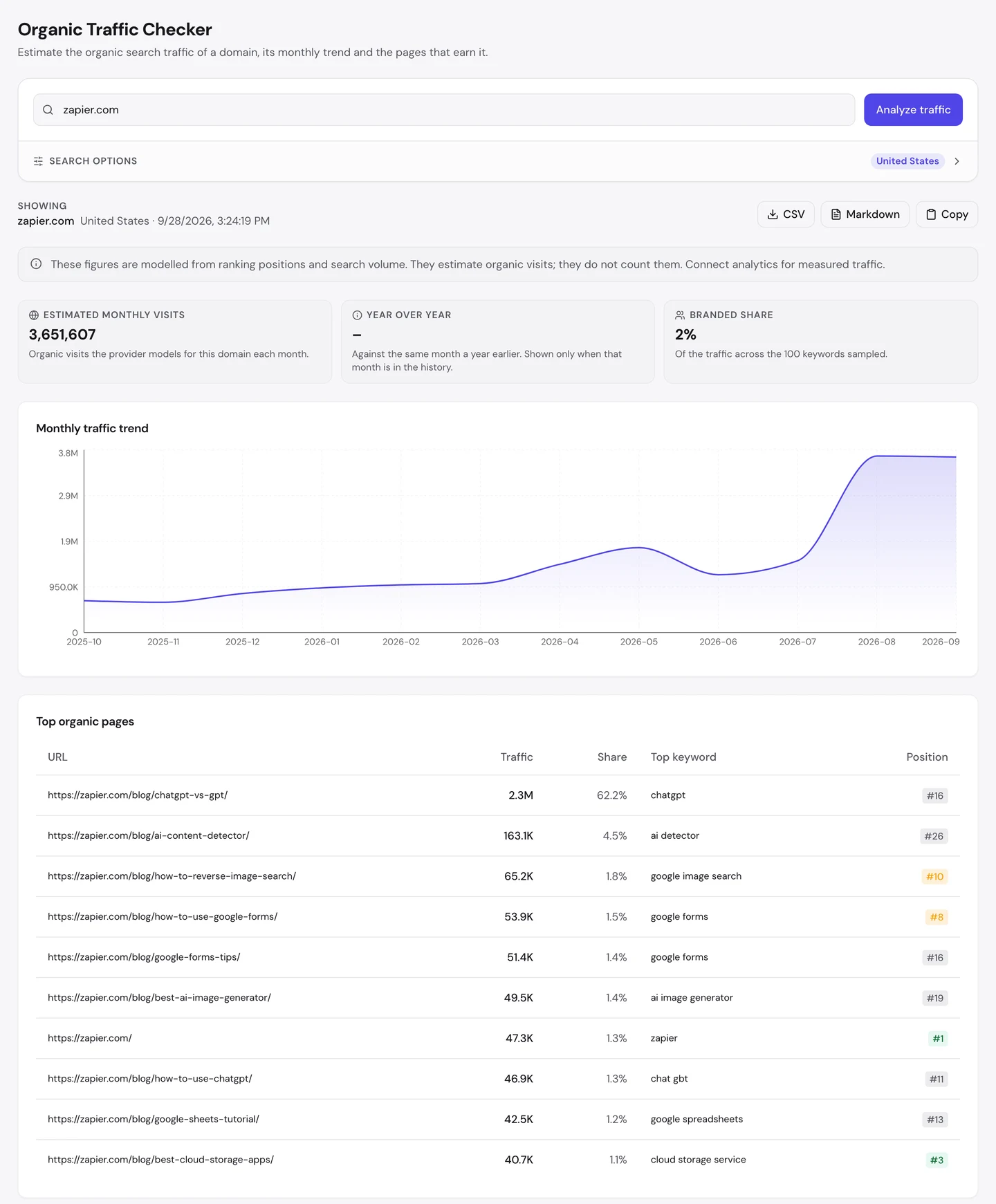
Zapier gets 3.7M visits a month from Google in the US, and one blog post about ChatGPT brings in 62% of them.
You probably think Zapier grows through its huge set of app integration pages. Our numbers show a different story.
The blog brings the visitors, and the integration pages bring the links.
We ran zapier.com through our whole SEO toolkit to see how the 2 fit together.
Here are 9 lessons you can copy, plus the one thing you can't.
Write about tools your buyers use
We started with our Organic Traffic Checker. It estimates a site's organic traffic, meaning the people who find it on Google without ads.
For Zapier, that's about 3.7M visits a month in the US. And 9 of its 10 biggest pages are blog posts.
Look at what they're about: Google Forms, Google Sheets, ChatGPT and image search. None of them is about Zapier.
That's the smart part. Zapier's buyers use those tools every day, so a how-to post meets them right where their work gets stuck.
Your buyers get stuck in their tools too, and they search for help when they do.
Then, once they trust the post, it shows them how Zapier can connect that tool to the rest of their day.
You can do the same. List the tools your customers use next to yours, and check which questions about them people search with our Keyword Research tool.
Write the clearest answer you can, and run the draft through our Content Optimizer. It compares your post with the pages already ranking and shows what they cover that yours doesn't.
Zapier's blog earns millions of visits by answering questions about tools its buyers already use. We find those questions in your market and write the pages that answer them best.
- We map the tools your buyers use every day
- We find the questions they type about them
- We write and optimize each post to rank
- SEO and GEO, so AI answers quote you too
Don't let one post carry your site
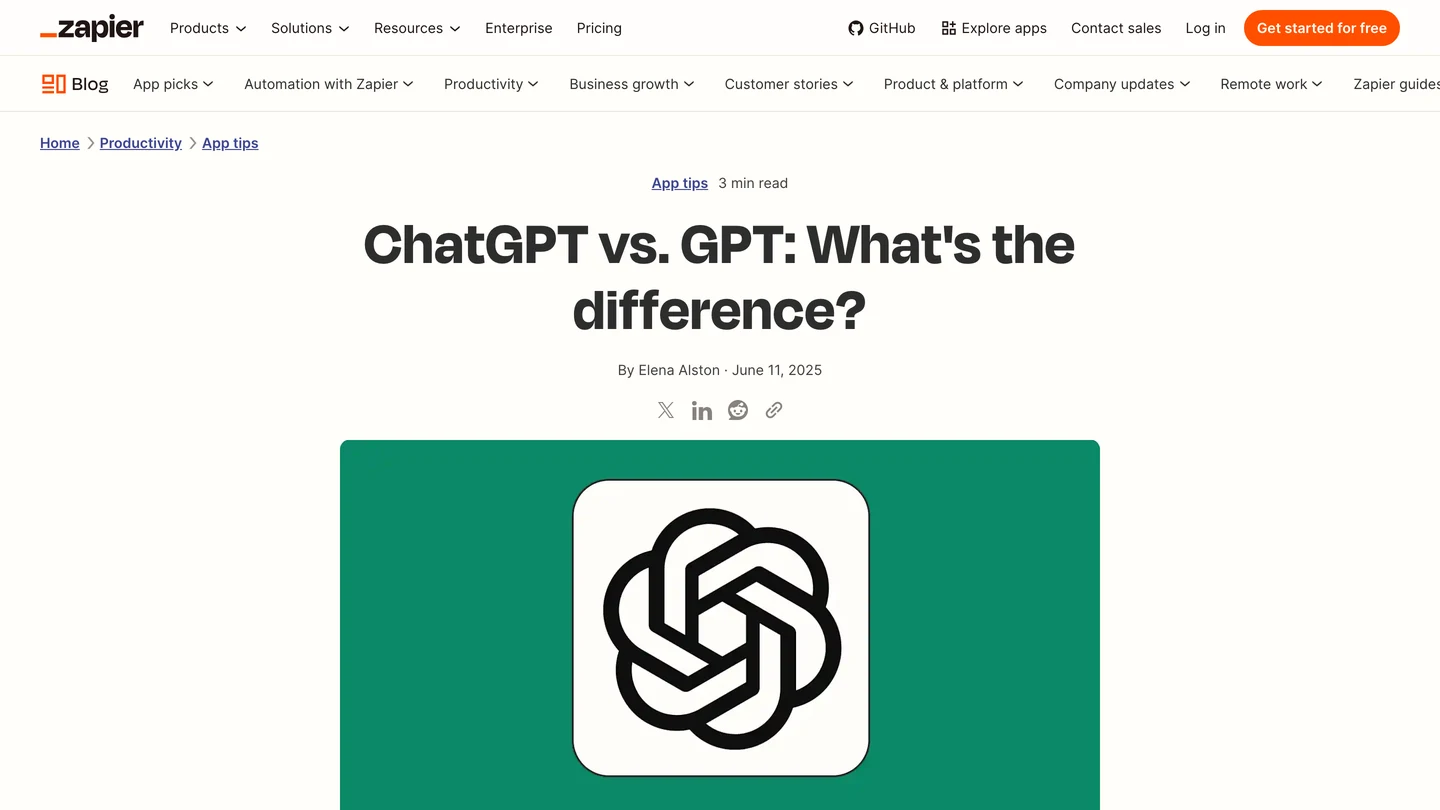
Now back to that one post. It's a short explainer on how ChatGPT differs from GPT, and you can read it in 3 minutes.
The Keywords tab of our Website Audit shows why it matters so much. It lists every search a site ranks for, where it ranks and how many visits each one sends.
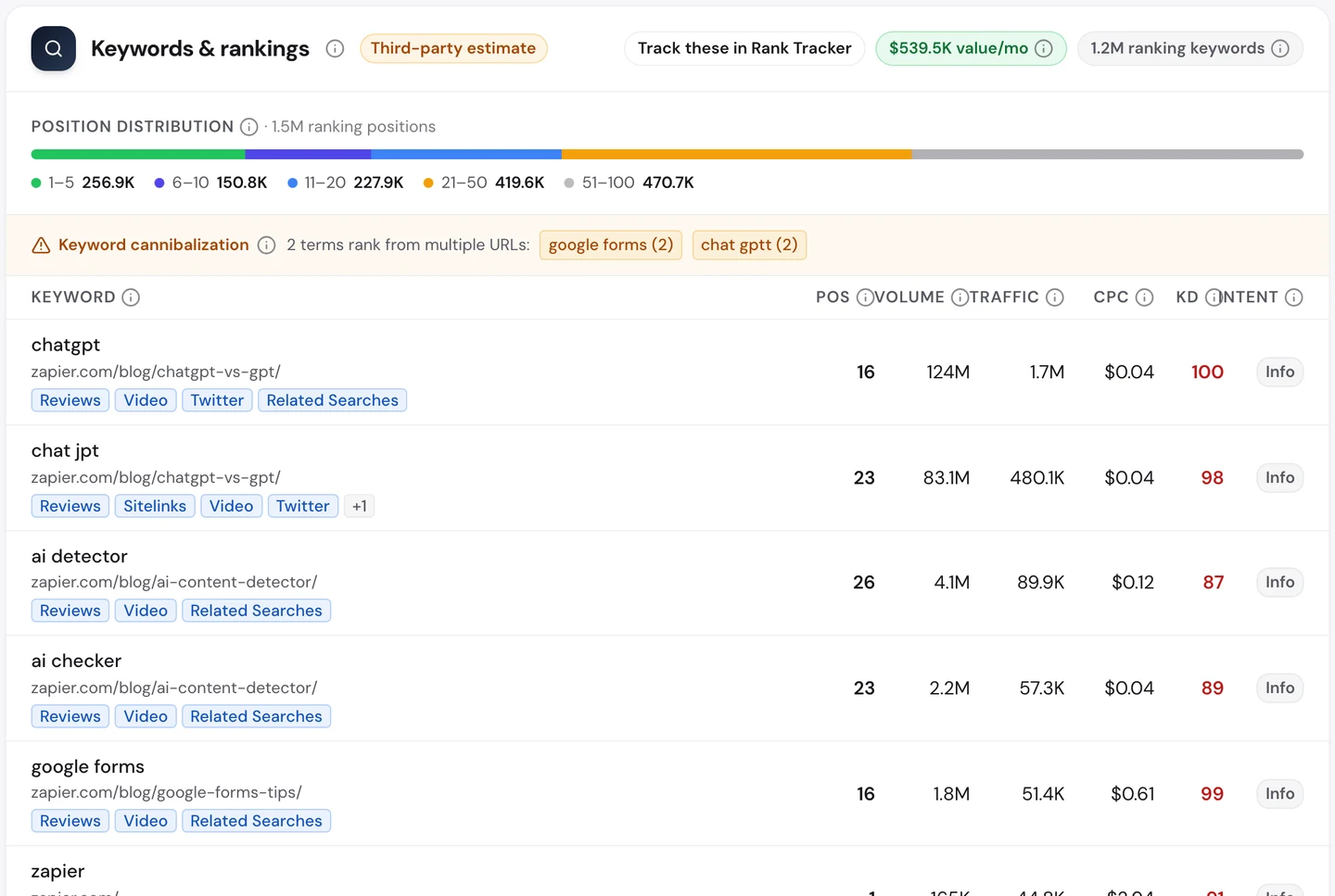
"ChatGPT" is searched about 124M times a month. Zapier's post only ranks 16th, on Google's second page.
Yet even there, it brings in about 1.7M visits a month. The traffic chart at the top shows the jump: Zapier's search traffic more than doubled in August 2026.
That's great while it lasts. But if you lose one ranking on one word, most of your visits could go overnight.
So put your biggest pages into our Rank Tracker. It checks where each page sits on Google and warns you the moment one starts to slide.
And if one page brings in more than half your traffic, build its neighbours next. More posts on the same topic spread the risk.
Earn searches for your own name
Here's the other number in that first report. Only 2% of Zapier's search visits come from people typing "zapier".
Compare that with Canva, the design app we studied on its own, where 87% of visitors search for the name. Chess.com, the online chess site, is at 92%.
Visitors who search for your name come back on their own. Visitors who find a how-to post have to be won again every month.
The audit's Competitors tab shows who's chasing the same searches.
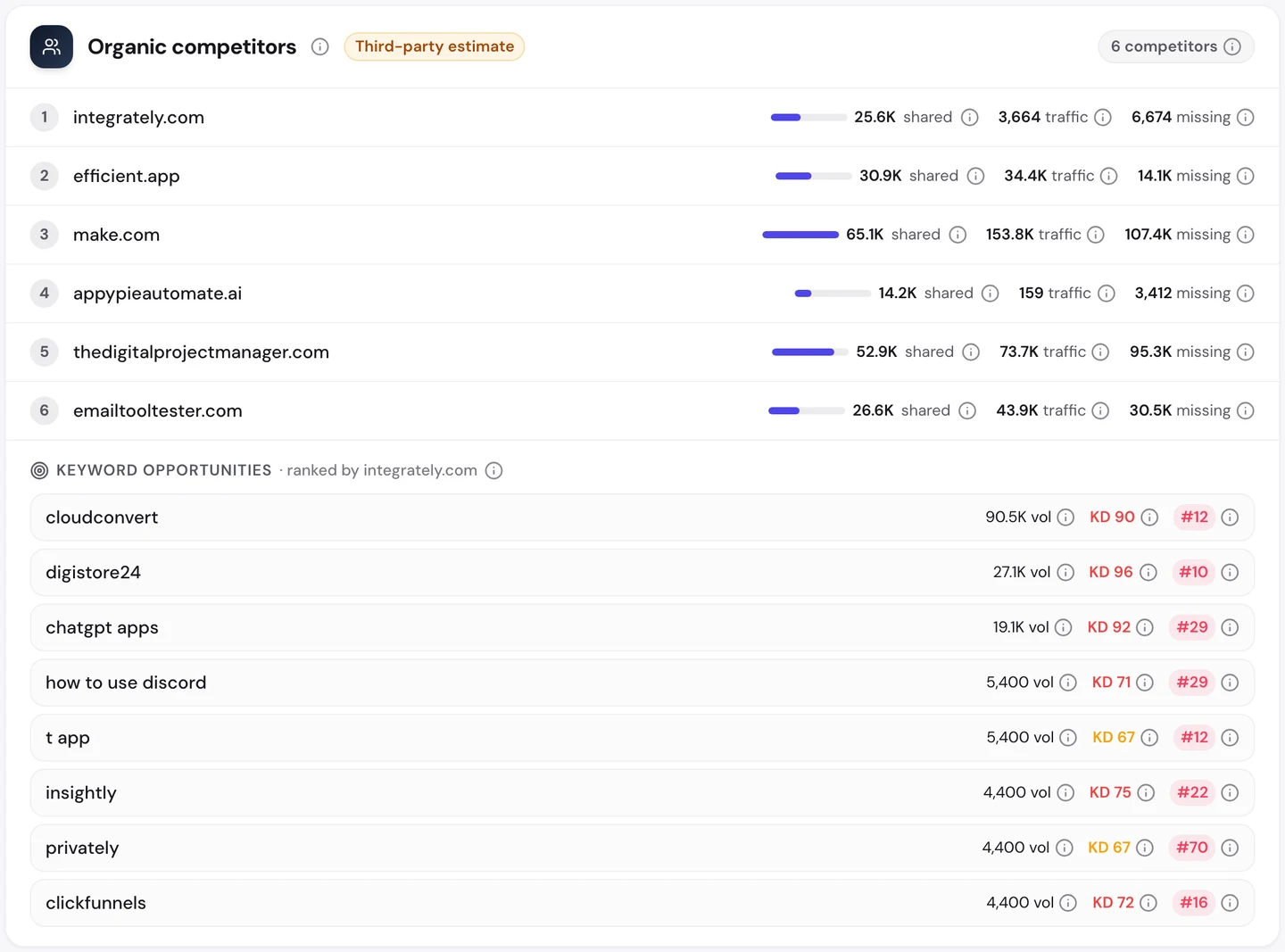
Make.com, the closest real rival, shares tens of thousands of searches with Zapier. So far it gets only a small slice of the traffic.
Still, a lead built on rankings alone can shrink fast. So turn readers into regulars, with a free account, a template or a weekly email that brings them back by name.
Build pages partners will link to
So what about the famous integration pages? Zapier has one for almost every pair of apps it connects, like Gmail and Google Sheets.
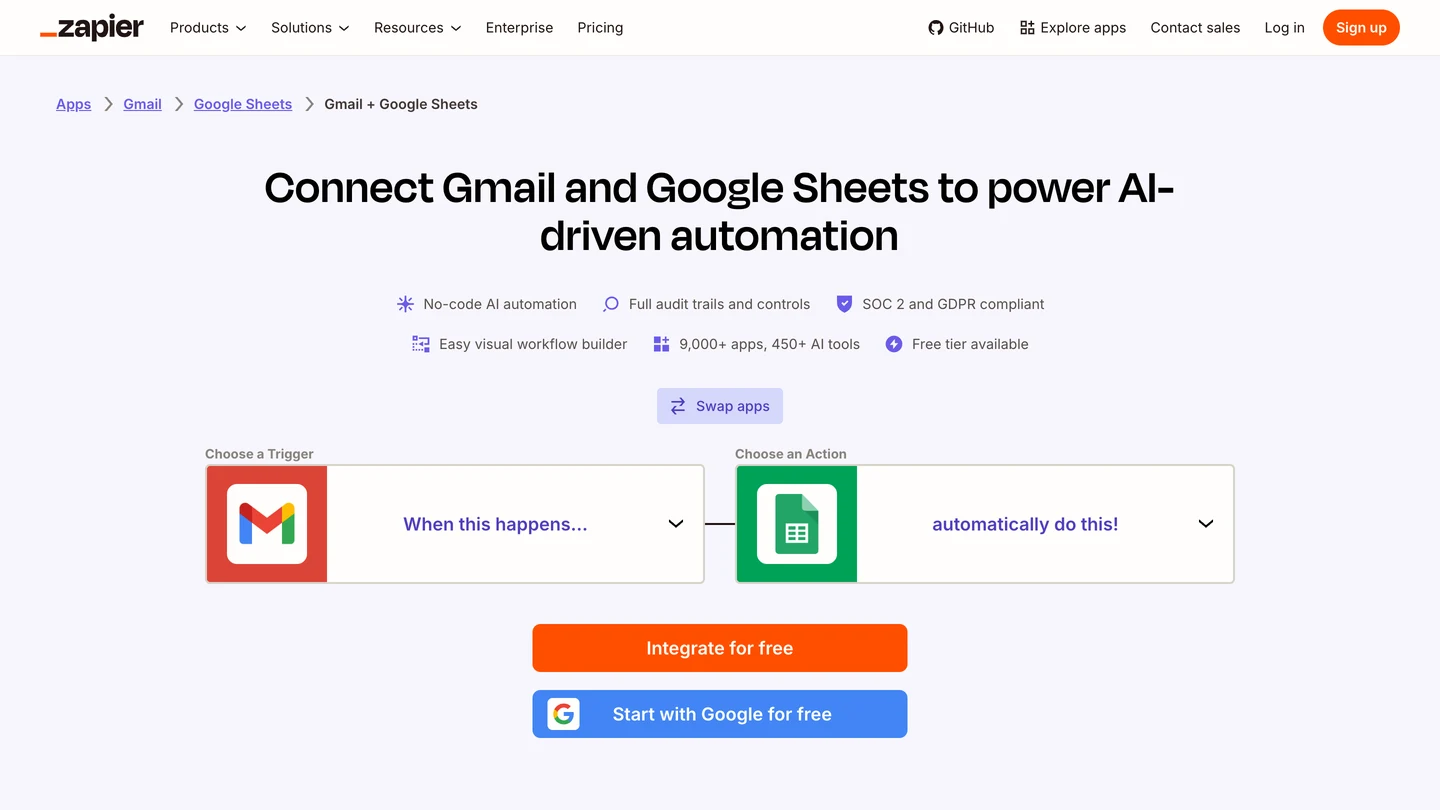
You won't find any of them in the top 10 pages for visits. But look at the Backlinks tab of our audit, which shows the same data as our Backlink Analyzer.
A backlink is a link from another website to yours. Google treats each one a bit like a vote of trust.
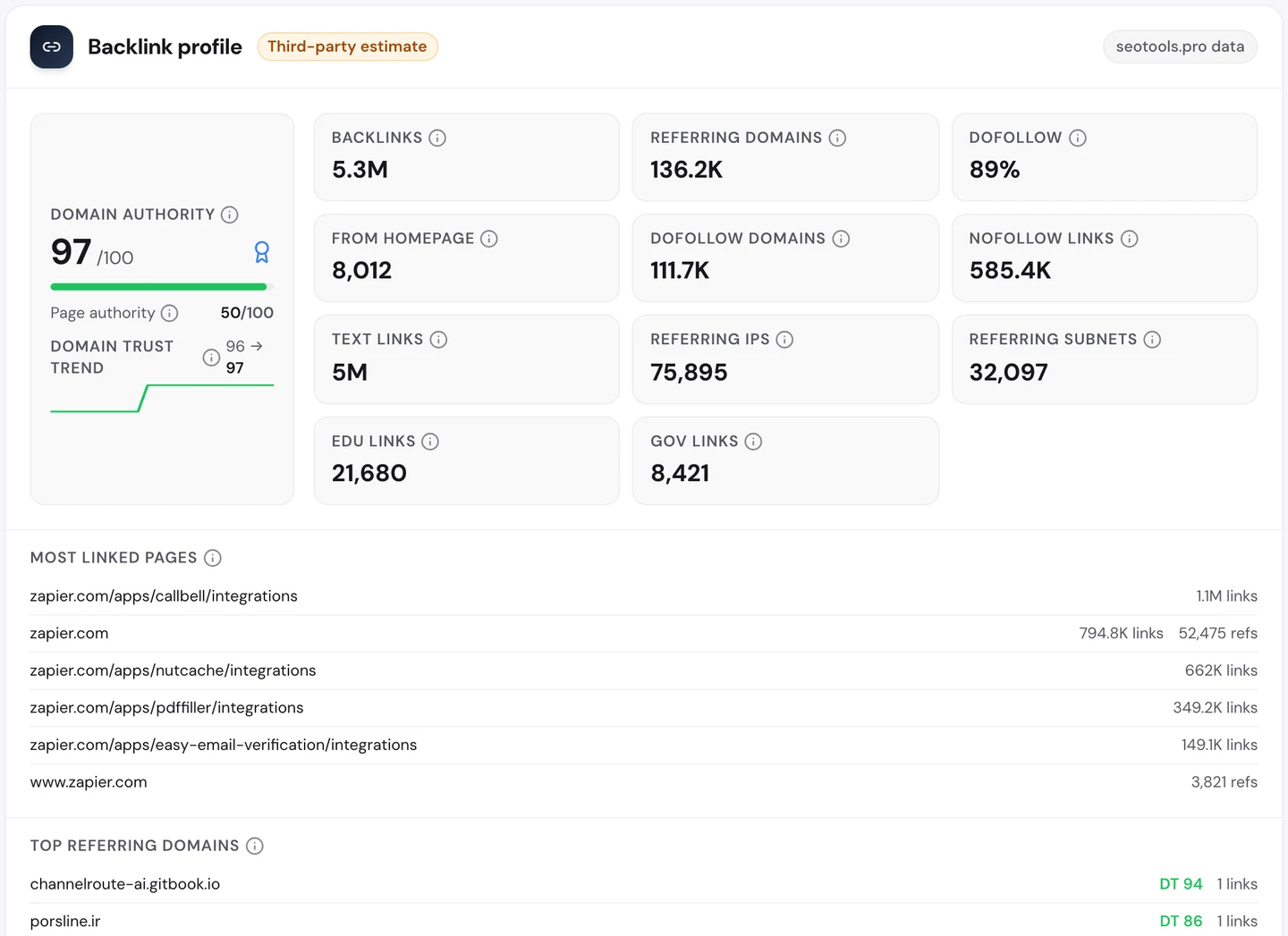
4 of the 5 most linked pages on zapier.com are integration pages. The page for one app, Callbell, alone has about 1.1M links.
That's because every app that works with Zapier links to its own Zapier page, often from its help docs and footer. Thousands of partners do this, and the trust flows to the whole site.
So if your product works with other products, give each partner a page about the two of you. They'll link to it, because it helps their own customers too.
Mark up pages so Google shows more
Why are those pages built so well? Our free browser extension shows you in one click.
Open the page, click the seotools.pro icon, and a panel opens beside it., and a panel opens beside it. It runs 35 SEO checks and scores the Gmail and Google Sheets page 84 out of 100.
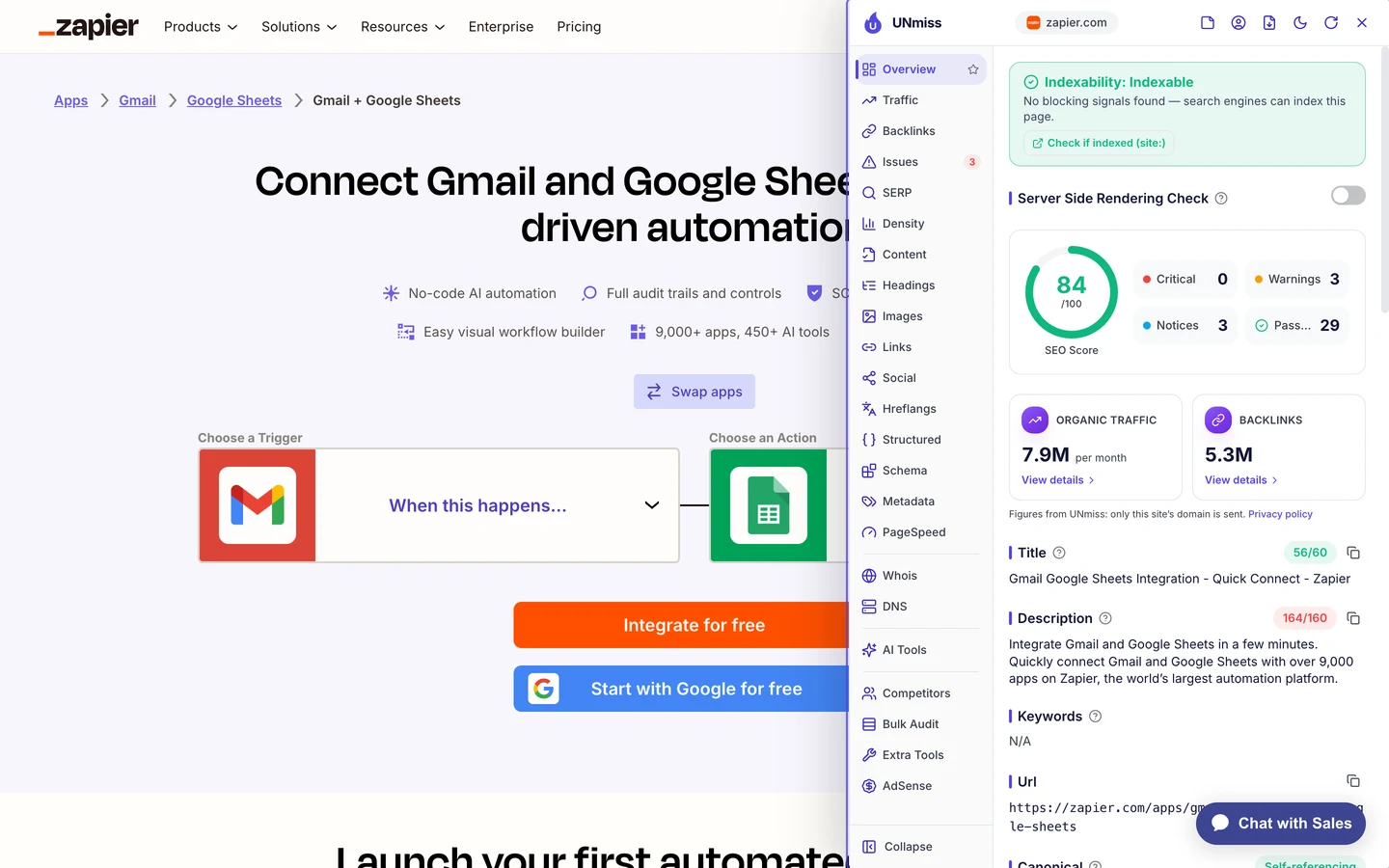
The title names both apps, just the way people search for them. The only real miss is a meta description, the short summary under a Google result, that runs 4 characters too long.
The Structured tab shows the clever part. The page carries structured data, hidden code that tells Google what's on it.
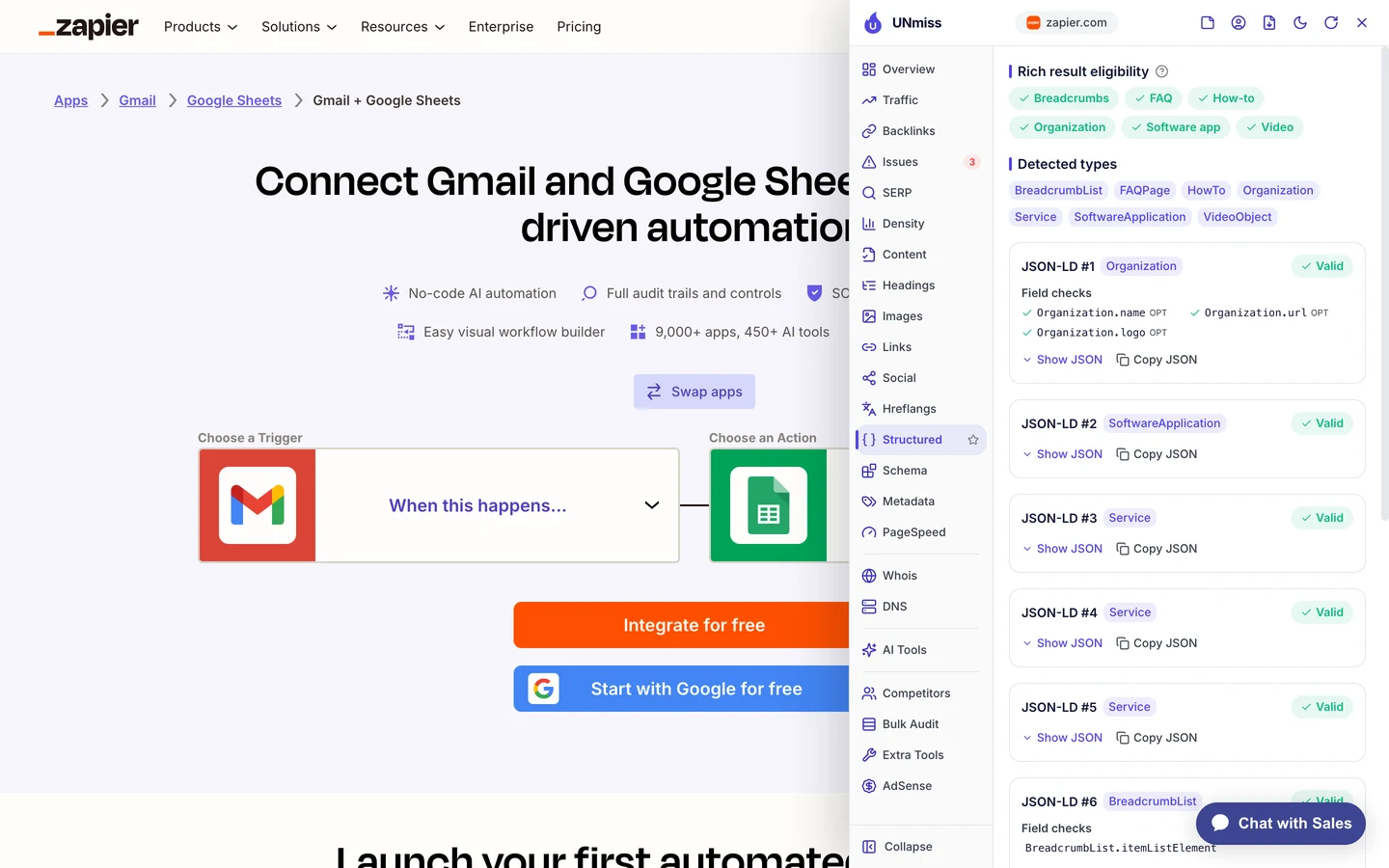
This one page is eligible for 6 kinds of rich results, the extras Google adds to a result, like FAQs, how-to steps and videos. That's how a template page can stand out in a crowded search.
You can add the same code to your own pages with our Schema Markup Generator. Then open them with the extension to check that Google can read it.
Audit your templates, not just pages
With thousands of pages built from a few templates, one mistake spreads fast. So we checked the whole site with our Website Audit.
It crawls a site the way Google does. It opens each page, follows the links to the next ones, and tests every page against a long list of checks.
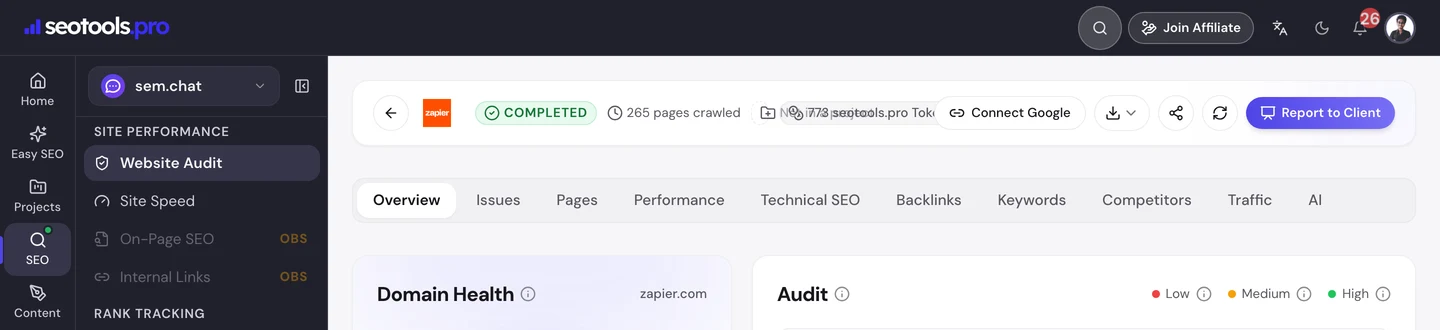
We had it crawl more than 250 pages from Zapier's sitemap, the file that lists a site's pages for Google. The site scored 87 out of 100, which the report rates as good.
The Issues tab sorts every problem by how much it matters, and it lists the fixes in order.
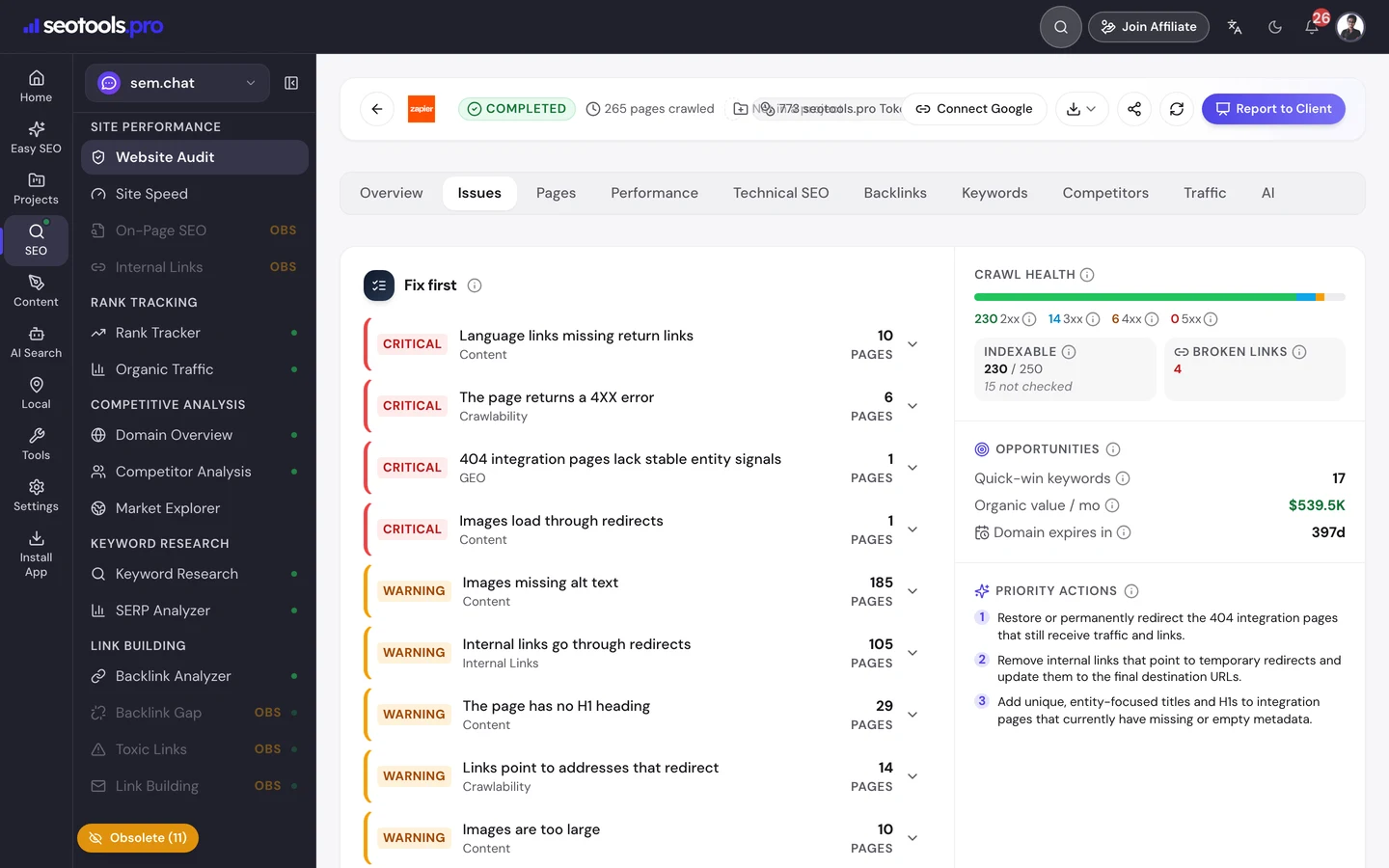
The first fix is the most useful. Some old integration pages now return an error, yet they still get links and visits.
Each of those is trust going to waste. Pointing them to a live page, with a redirect, would win it back.
The Technical SEO tab caught a template problem too. The same 2 generic descriptions sit on more than 50 app pages.
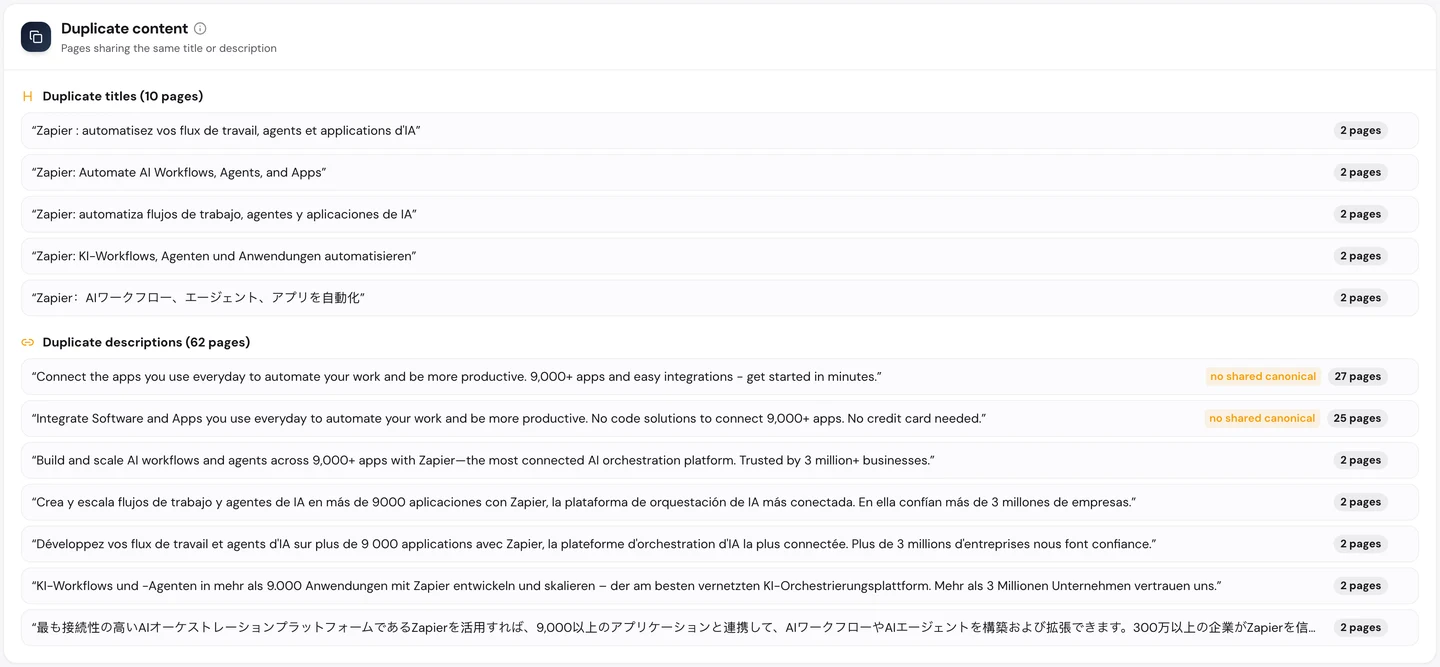
When your pages share a description, Google often writes its own. A short, specific line for each app gives people a reason to click.
Check speed on real phones
The Performance tab of the same audit adds real-world data. It shows Core Web Vitals, Google's 3 checks of how fast a page loads, how fast it reacts and whether it stays still, measured on real visitors' devices.
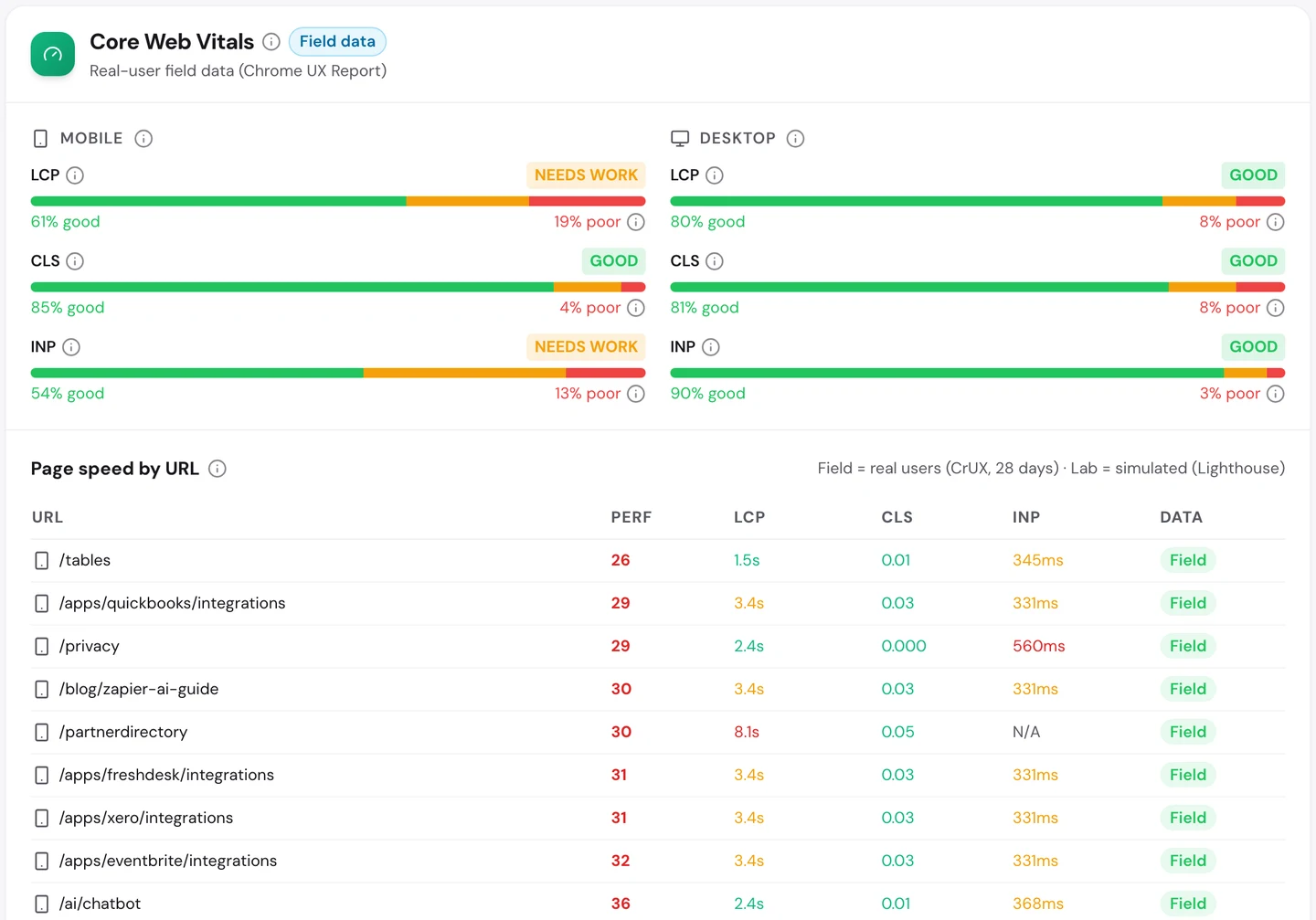
On desktop, Zapier passes all 3. On phones, 2 of them need work.
The lab tests below show you where to start. Many integration pages score under 40 out of 100, because each one loads a heavy app picker.
Fix the template once and every page built from it gets faster. You can test single pages with our Site Speed tool before and after.
Open your pages to AI assistants
Zapier is a global site. The audit's Traffic tab puts it at about 8M search visits a month worldwide, and India sends almost a quarter.
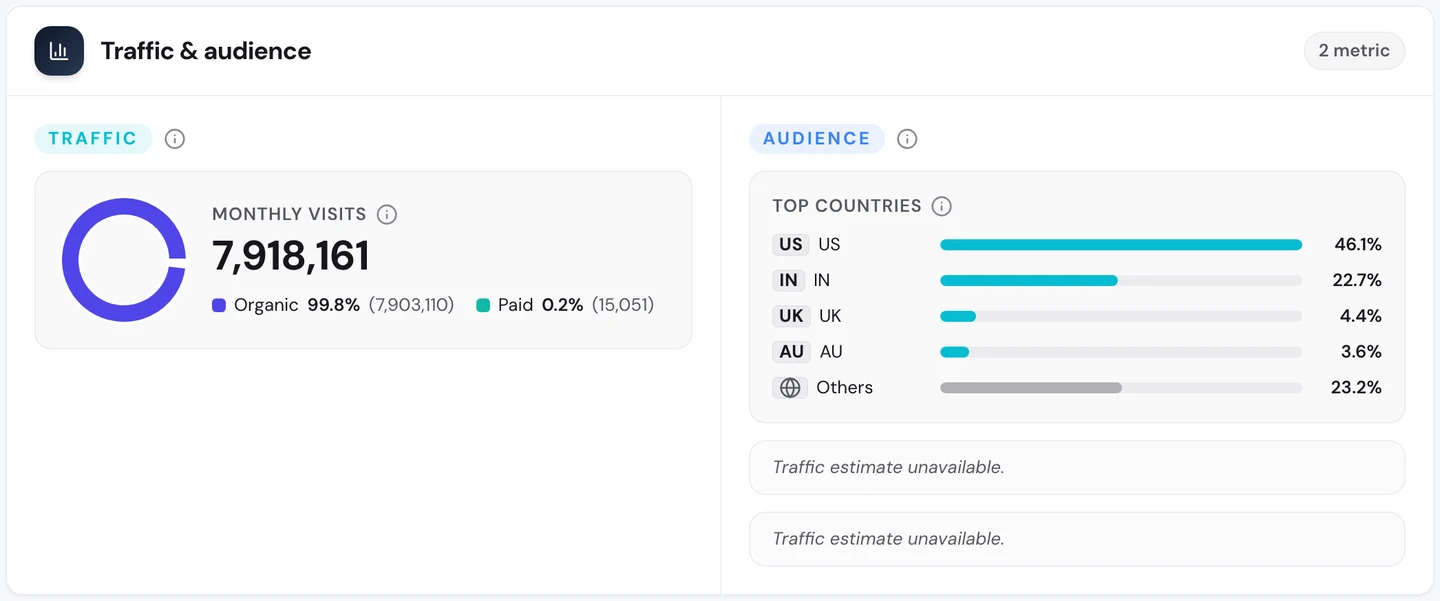
More and more people now ask ChatGPT or Claude before they ask Google, and your buyers do too. So we checked what AI tools may read on zapier.com.
Those tools send crawlers, programs that visit pages and read them. The rules for them live in robots.txt, a file that tells crawlers what they may read, and the extension reads it for you.
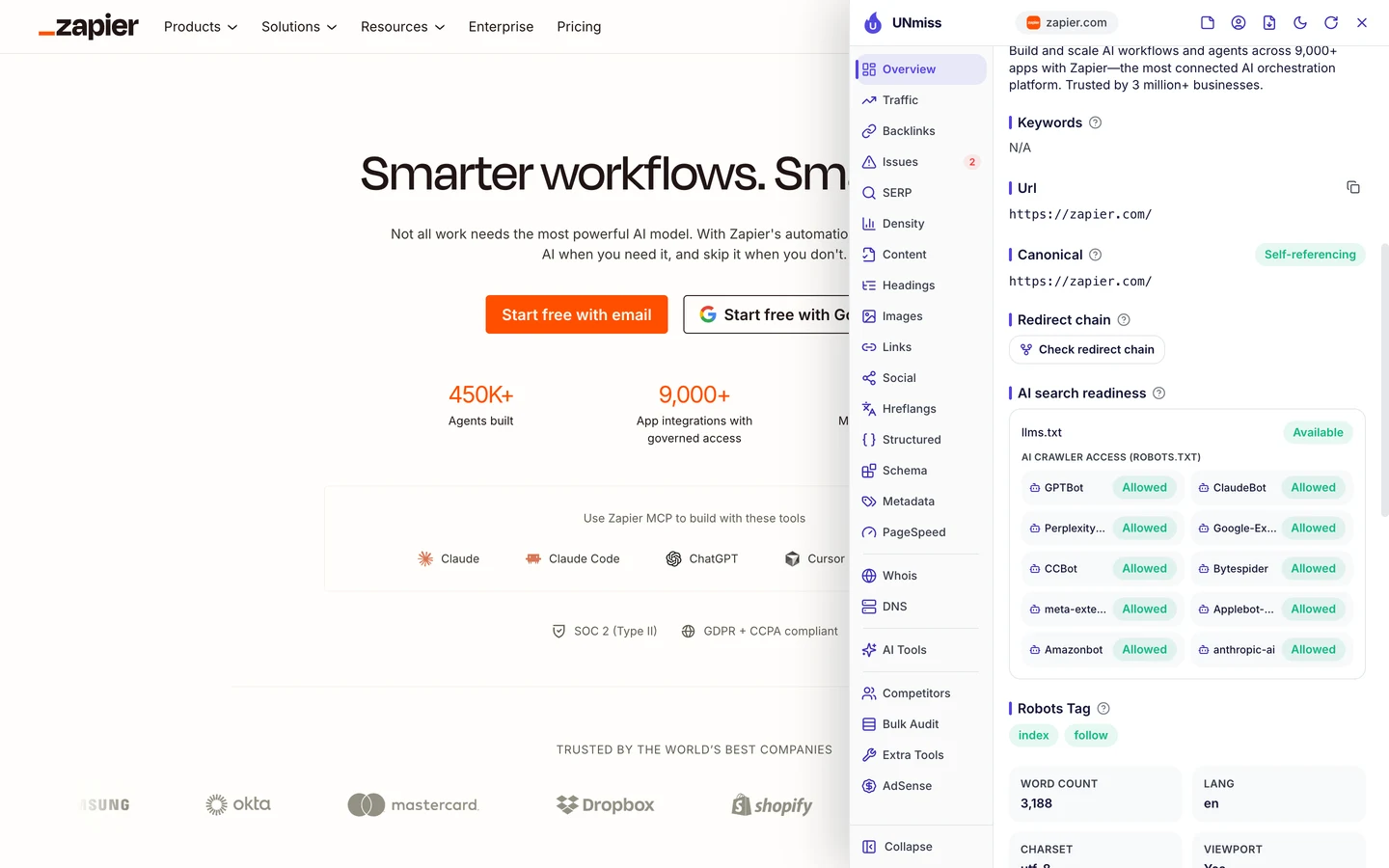
Zapier lets every AI crawler in, and it publishes an llms.txt file, a short guide that tells AI tools which pages matter most. That's the opposite of Canva, which blocks most AI crawlers.
Being read isn't the same as being linked, though. In our AI citation study, AI assistants named Zapier 16 times in one afternoon and linked to it 0 times.
So open your pages to AI, then check what it says about you with our AI Visibility Checker. Write your robots.txt rules with our robots.txt generator.
One last number needs care, though: what all this traffic is worth.
Don't judge traffic by its ad price
Our Domain Overview shows Zapier ranking for about 1.2M keywords. A keyword is just a phrase people type into Google.
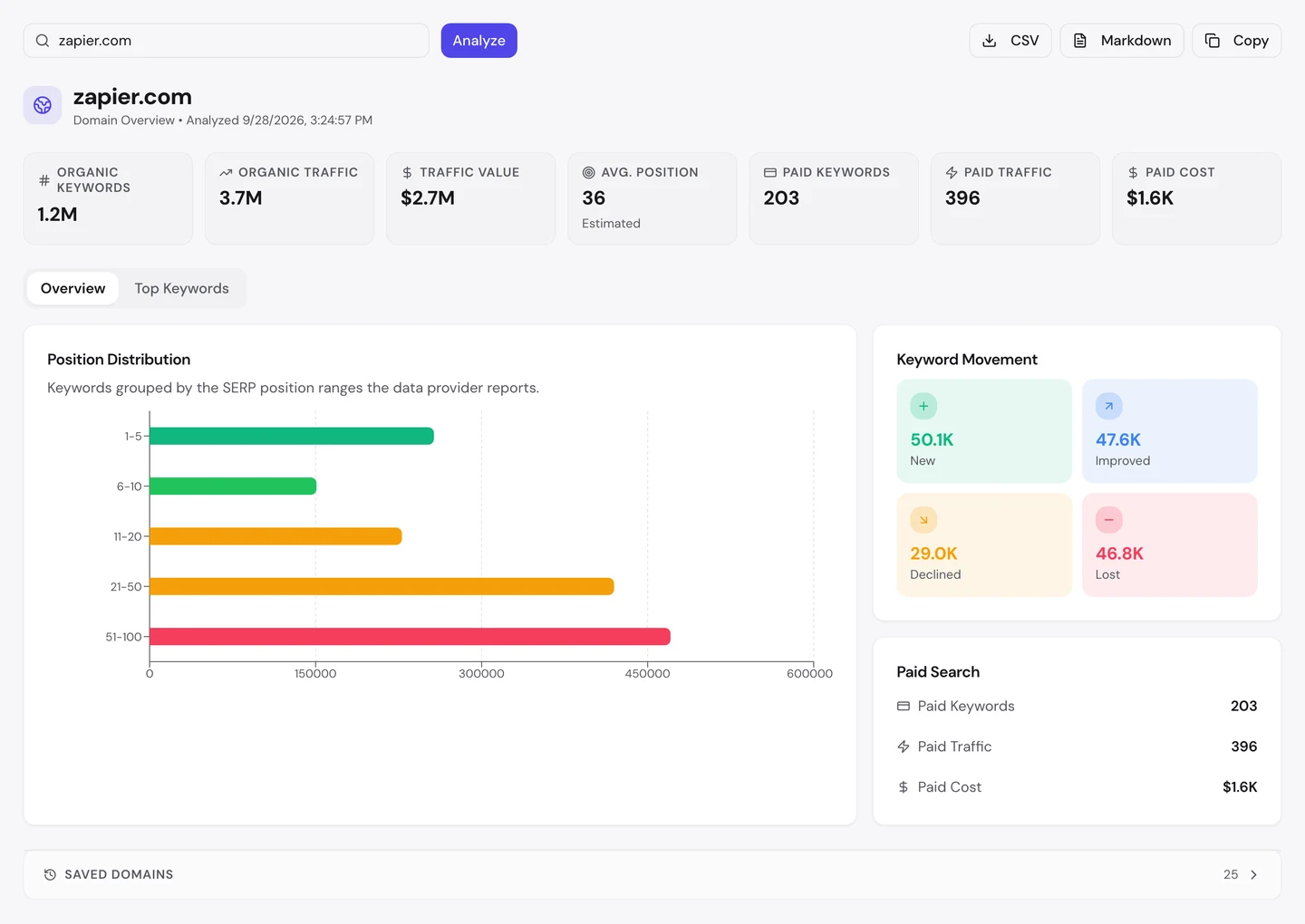
It values the traffic at about $2.7M a month. That's what the same visits would cost as Google ads.
It sounds low for so many visits, and that's the lesson. Nobody pays much to advertise on "ChatGPT", so those visits are priced cheaply.
But a reader who connects their first 2 apps can become a paying customer. So check what your visitors do after they land, not just what the ads would cost.
One post brings in 62% of Zapier's search visits. Our Organic Traffic Checker shows your top pages, their share and your brand share, so you know if one page is carrying your whole site.
- The same report that found Zapier's ChatGPT post
- Each top page's traffic, share and top search
- Run it on any rival's domain too
What you cannot copy
First, the part you can't copy: thousands of partners who want to be listed.
Zapier connects with thousands of apps, and each one gains from sending its users to Zapier. That's why they link to it, and a new product can't buy that overnight.
Now a few honest notes on the numbers.
We took all our figures on 28 September 2026. The 3.7M figure counts US searches, and the 8M worldwide figure comes from the audit's Traffic tab.
Both are estimates. Nobody outside Zapier can count its real visits, so tools work them out from rankings and search volume.
The traffic jump in August 2026 comes from the tool's estimates too. A ranking that moves a few places on a word as big as "ChatGPT" swings the total a lot.
The one number to take away
62%.
That's the share of Zapier's US search visits that come from a single 3-minute blog post. It's a huge win, and a huge risk.
That's the lesson for any site. Win the searches your buyers make every day, then spread your traffic across enough pages that no single ranking can sink you.
Found a tool your buyers use every day? That could be your next post.
You can run every one of these checks on your own site, and on your rivals', and see the same numbers for yourself.
Frequently asked questions
Should a software company write about tools it doesn't make?
Yes, when your buyers use those tools with yours. A clear how-to earns their trust at the moment they need help. Just make sure each post shows where your product fits, or the visits won't turn into customers.
Can a small site build integration pages like Zapier's?
Yes, on a smaller scale. Start with a page for each partner you already work with. Ask them to link to it from their help docs, since it helps their users too.
How many integration pages are too many?
A page is worth keeping if someone searches for it or links to it. Pages that get neither can be merged or kept out of Google with a noindex tag, a line of code that asks Google not to list a page.
What happens when a page with many links dies?
The links point at an error, and the trust they carried is lost. Redirect the old address to the closest live page, so visitors and links both land somewhere useful.
Is ranking on Google's second page ever worth it?
For huge searches, it can be. Most people never scroll that far, but a small share of a giant number is still a lot. Treat it as a bonus, not a plan.
Does an llms.txt file help me rank on Google?
No. Google doesn't use it for rankings. It's a guide for AI tools, and it helps them find your most important pages when they answer questions.
How often should I update a popular how-to post?
Whenever the tool it explains changes. Screenshots and steps go stale fast, and readers leave when the buttons look different. Check your biggest posts every few months.
How do I tell if one page is carrying my whole site?
Look at the share next to each of your top pages. If one page brings in more than a third of your visits, you depend on it, and it's time to build more pages around the same topic.