Rotten Tomatoes gets 31M visits a month from Google in the US, and almost none of those people search for the name Rotten Tomatoes.
They search for a film or a show, and Rotten Tomatoes has a page for each one. Its US search traffic has more than doubled in a year.
We ran Rotten Tomatoes through our whole SEO toolkit to see how a review site wins those searches.
Here are 9 lessons you can copy, plus the part you can't.
Build a page for every title
We started with our Organic Traffic Checker. It estimates a site's organic traffic, meaning the people who find it on Google without ads.
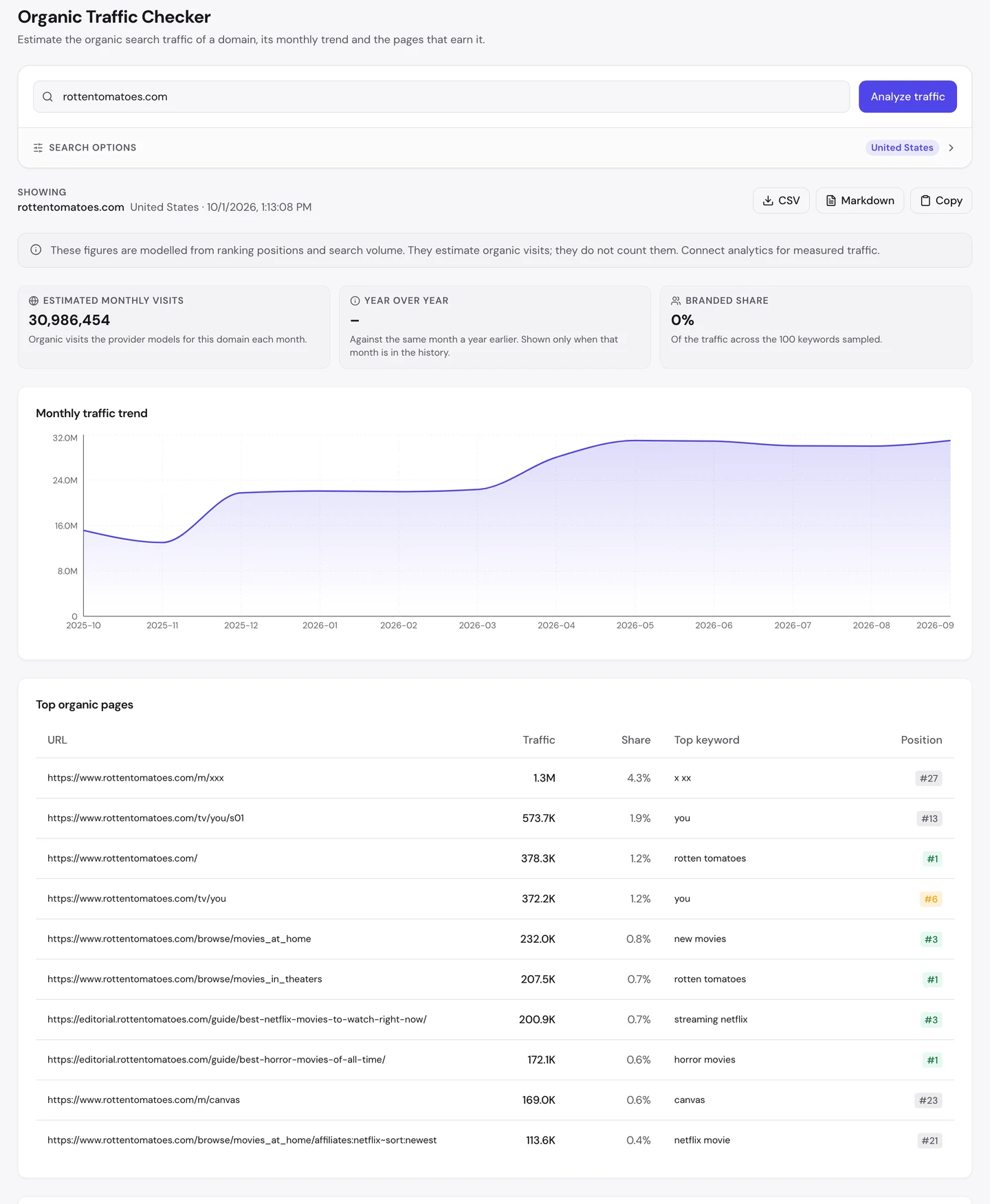
For Rotten Tomatoes, that's about 31M visits a month in the US. The chart shows it climbing from about 13M a year ago.
Look at the top pages. Every one is a film, a TV show, or a list of them.
In the searches we sampled, almost nobody typed the brand name at all. You probably don't either, you just type the film you're curious about.
The Traffic tab of our Website Audit shows the whole world.
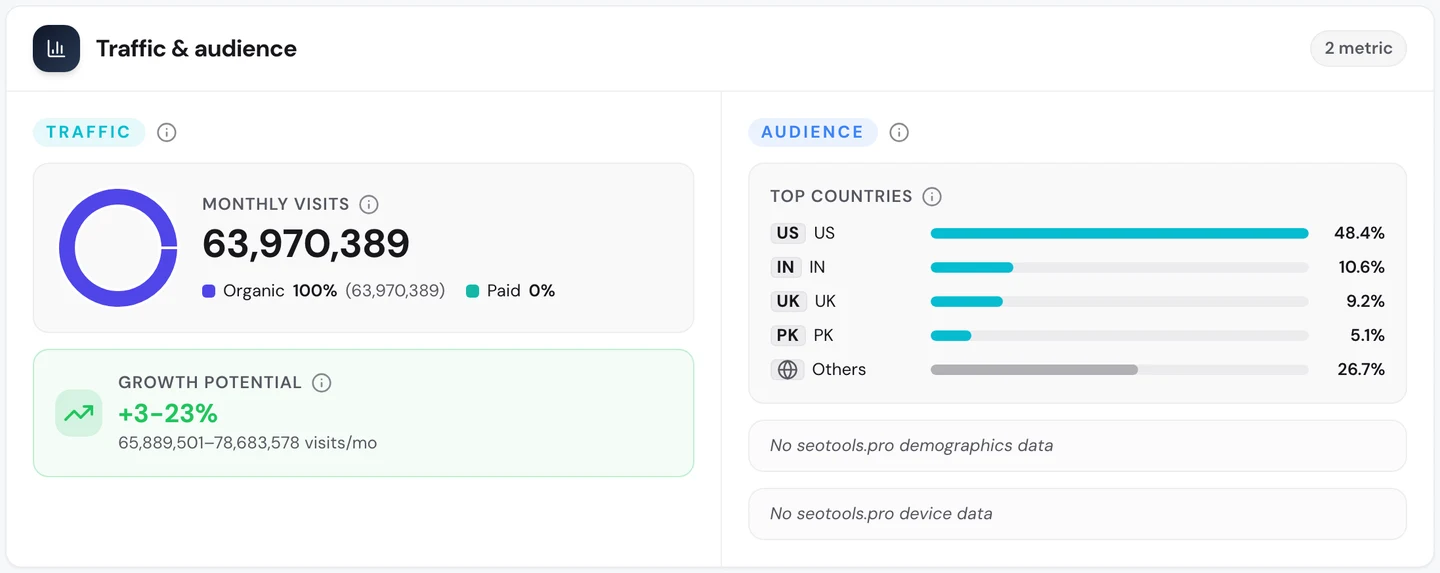
That's about 64M search visits a month, and half come from the US.
Goodreads, the book site we studied on its own, works the same way for books. One page per title, and the searches add up.
So if your business has a catalogue, give every item its own page. Each one is a door into your site.
Win the search for the title itself
Some titles are ordinary words, and that's where you'll find the biggest numbers.
The Keywords tab of our audit lists every search a site ranks for, where it ranks and how many visits each one sends.
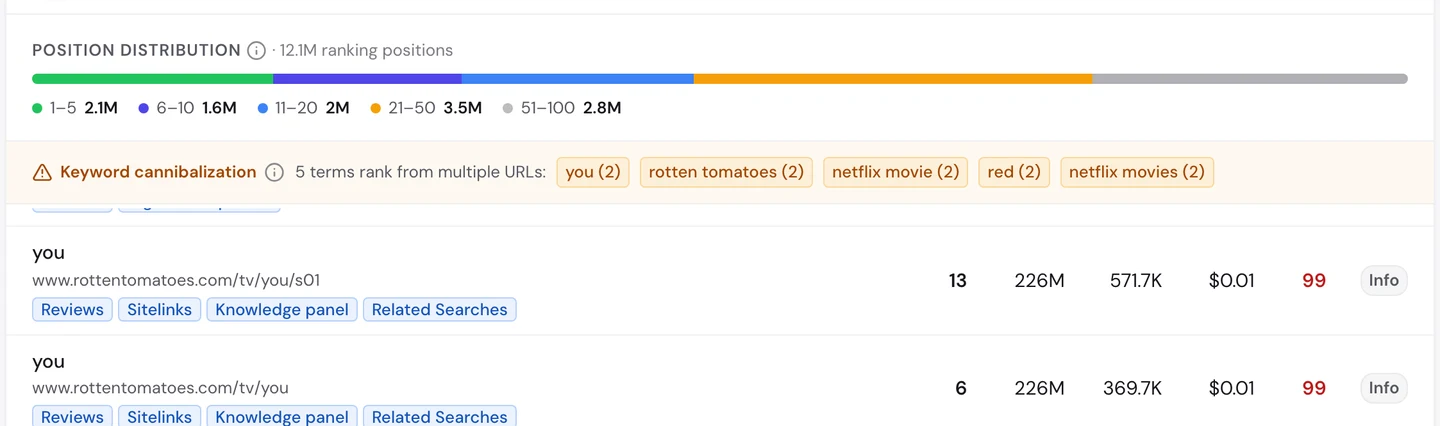
"You" is the name of a Netflix show, and it's also one of the most searched words there is. Rotten Tomatoes ranks 6th for it, and that alone brings in hundreds of thousands of visits.
But look above the table. 2 Rotten Tomatoes pages, the show and its first season, compete for the same search.
That's called keyword cannibalization, when your own pages fight each other. GeeksforGeeks, which we studied too, has the same problem with the search "c".
So pick one main page for each title and link your other pages to it. Then check where each one ranks with our Keyword Research tool.
Keep your best lists fresh
Rotten Tomatoes also runs an editorial site full of lists. One of them ranks first for "horror movies".
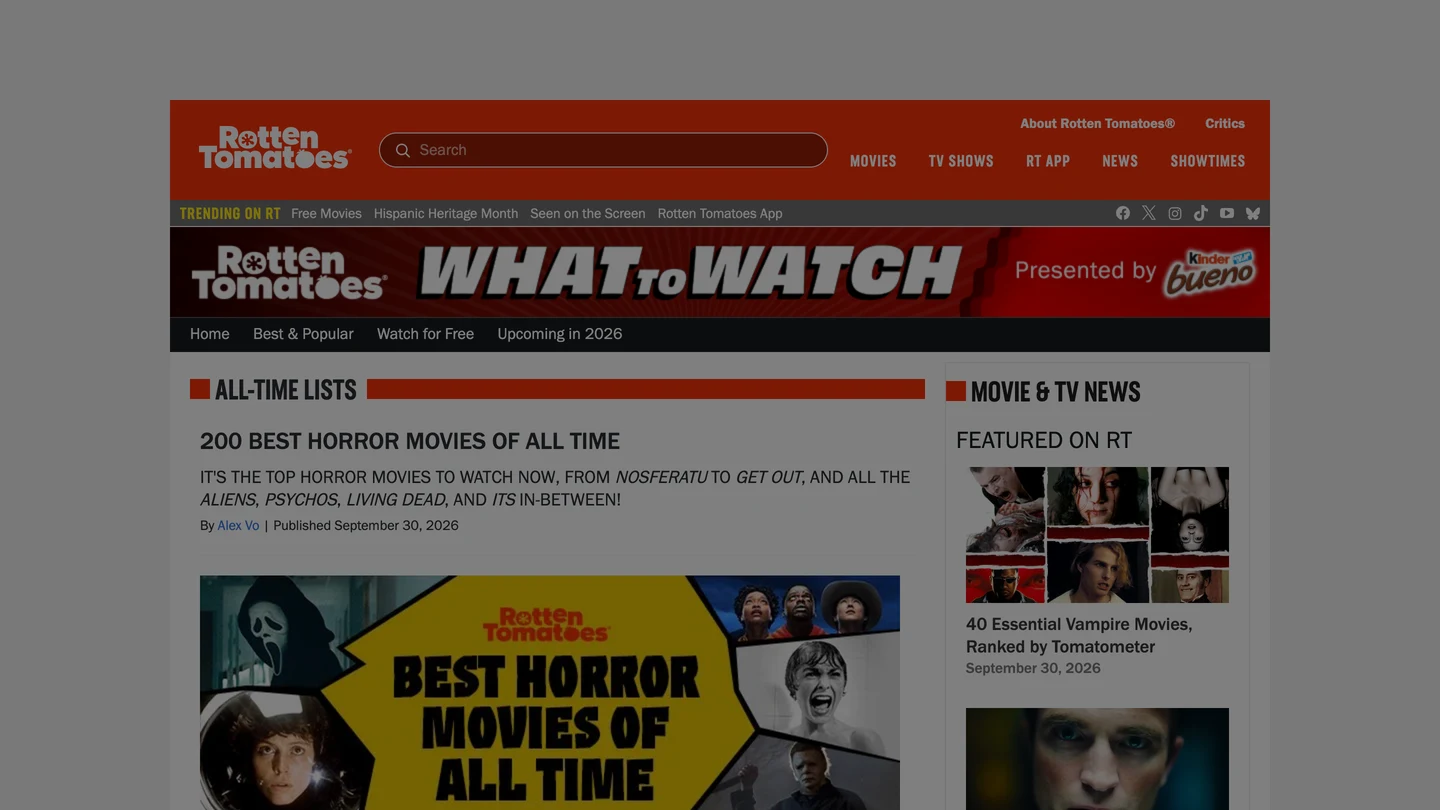
It's an all-time list, yet it carries this month's date. The Netflix list even puts the month in its title.
You want a list that's up to date, and so does everyone else. Google notices when a page is kept current.
Our free browser extension shows how the page is built. Open the page, click the seotools.pro icon, and a panel opens beside it.
It runs 35 SEO checks and scores this list 74 out of 100, with no critical problems.
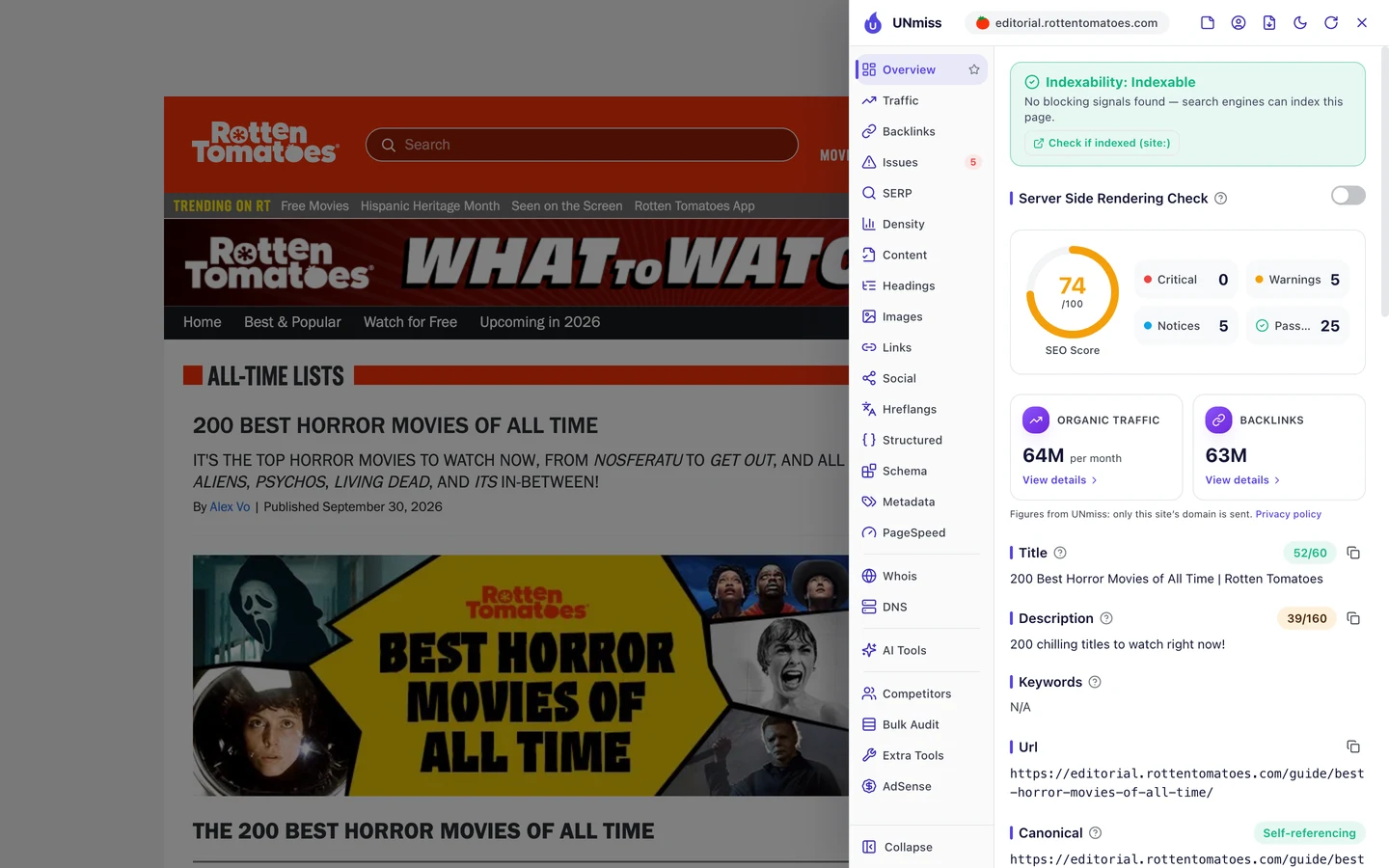
The weak spot is the description, the short summary Google may show under the title. It's only 39 characters, so most of the space Google offers goes unused.
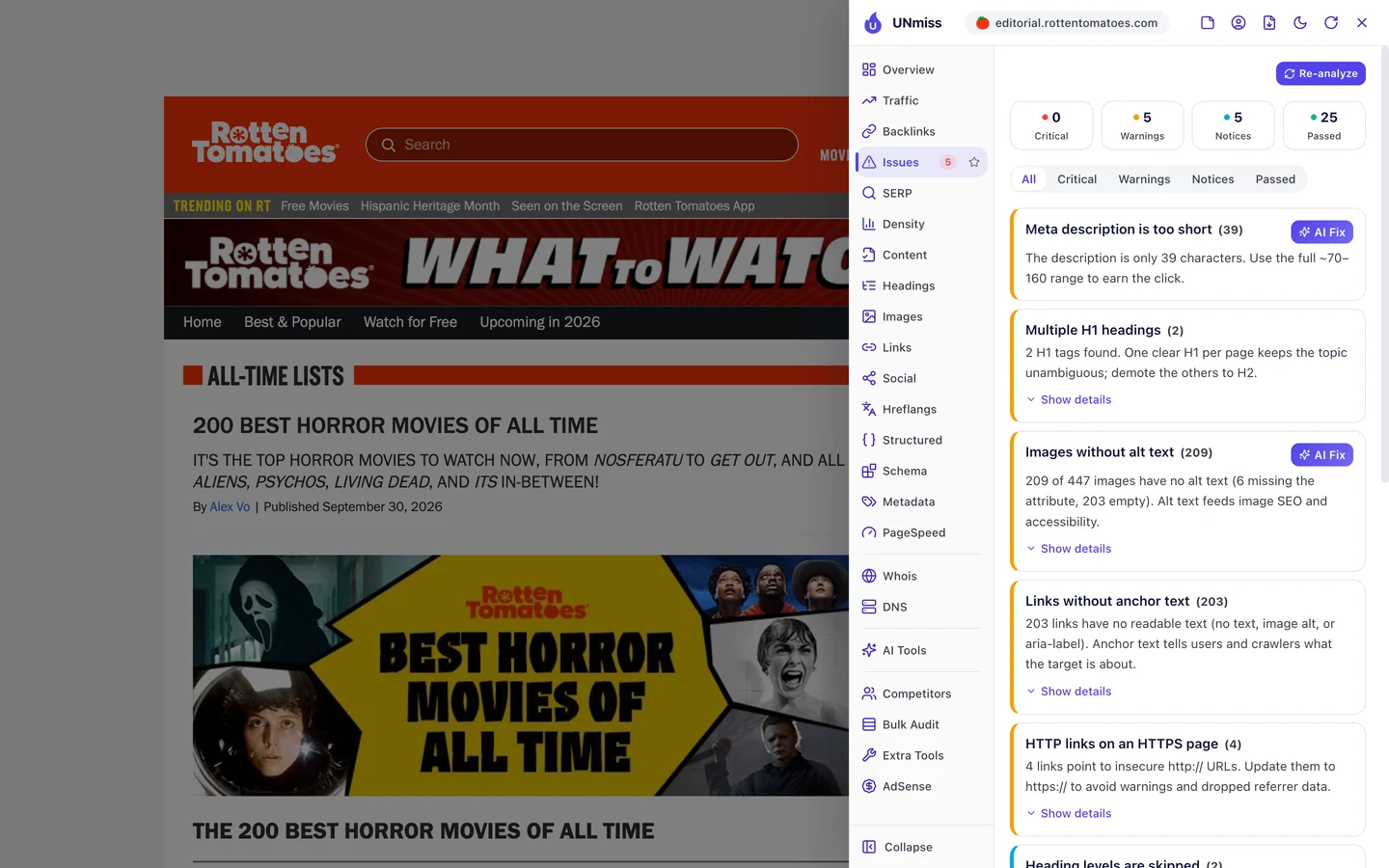
The Issues tab finds more. 209 of the 447 poster images have no alt text, a short description that tells Google and screen readers what a picture shows.
So update your most popular lists every month, and use the full space for each description. Our Meta Tag Generator helps you write one.
Rotten Tomatoes wins millions of searches with one page per title and lists it keeps fresh. We build page templates and lists like these for your products, so every item can be found on Google.
- We find the titles and items people search for
- We design one strong template for each page type
- We plan the lists worth updating every month
- SEO and GEO, so AI answers can quote you too
Put your score where Google sees it
Here's the page for You.
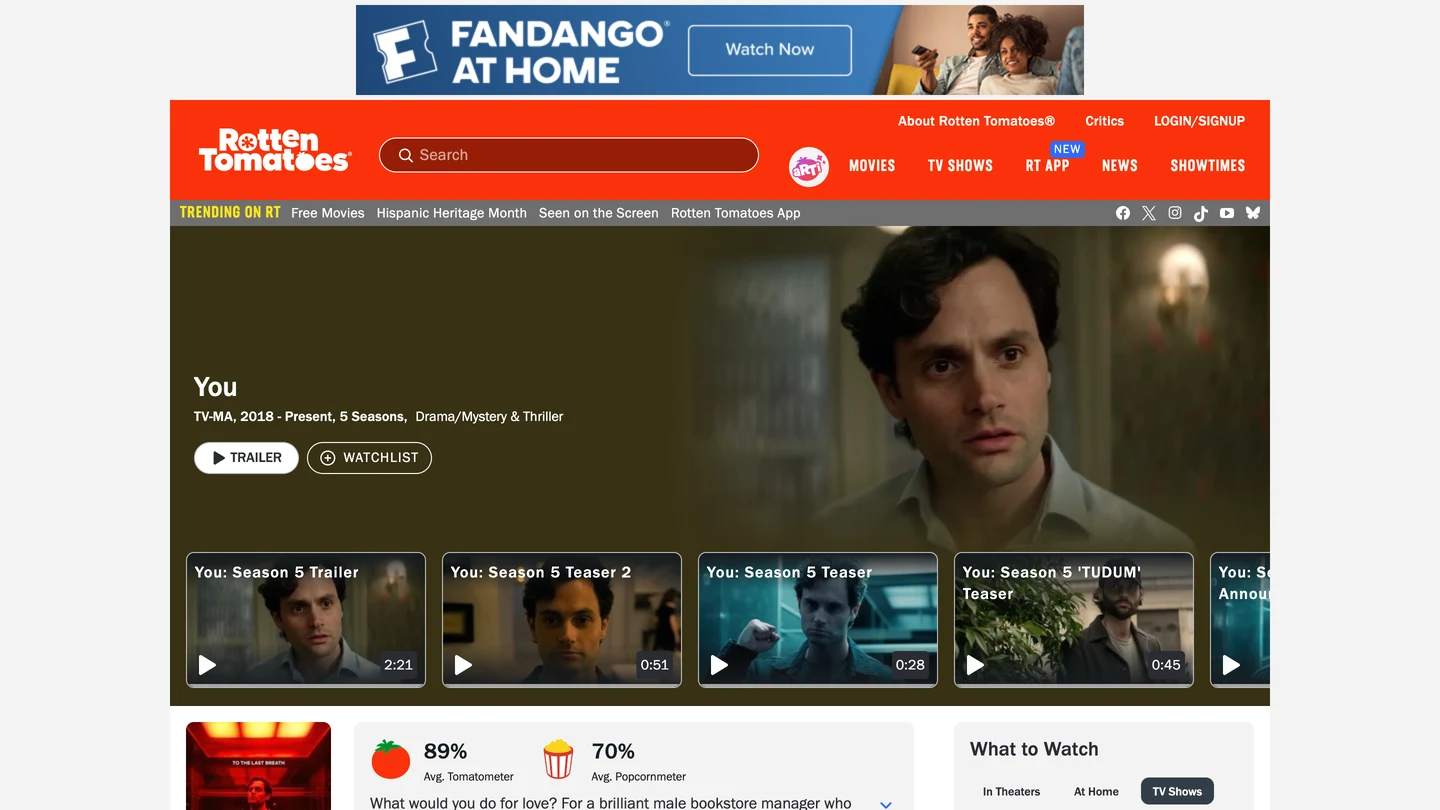
The 2 scores, one from critics and one from viewers, sit right under the trailers. That's why people come, so it's the first thing they see.
The extension's Structured tab shows the hidden part. Structured data is code that tells Google what a page is.
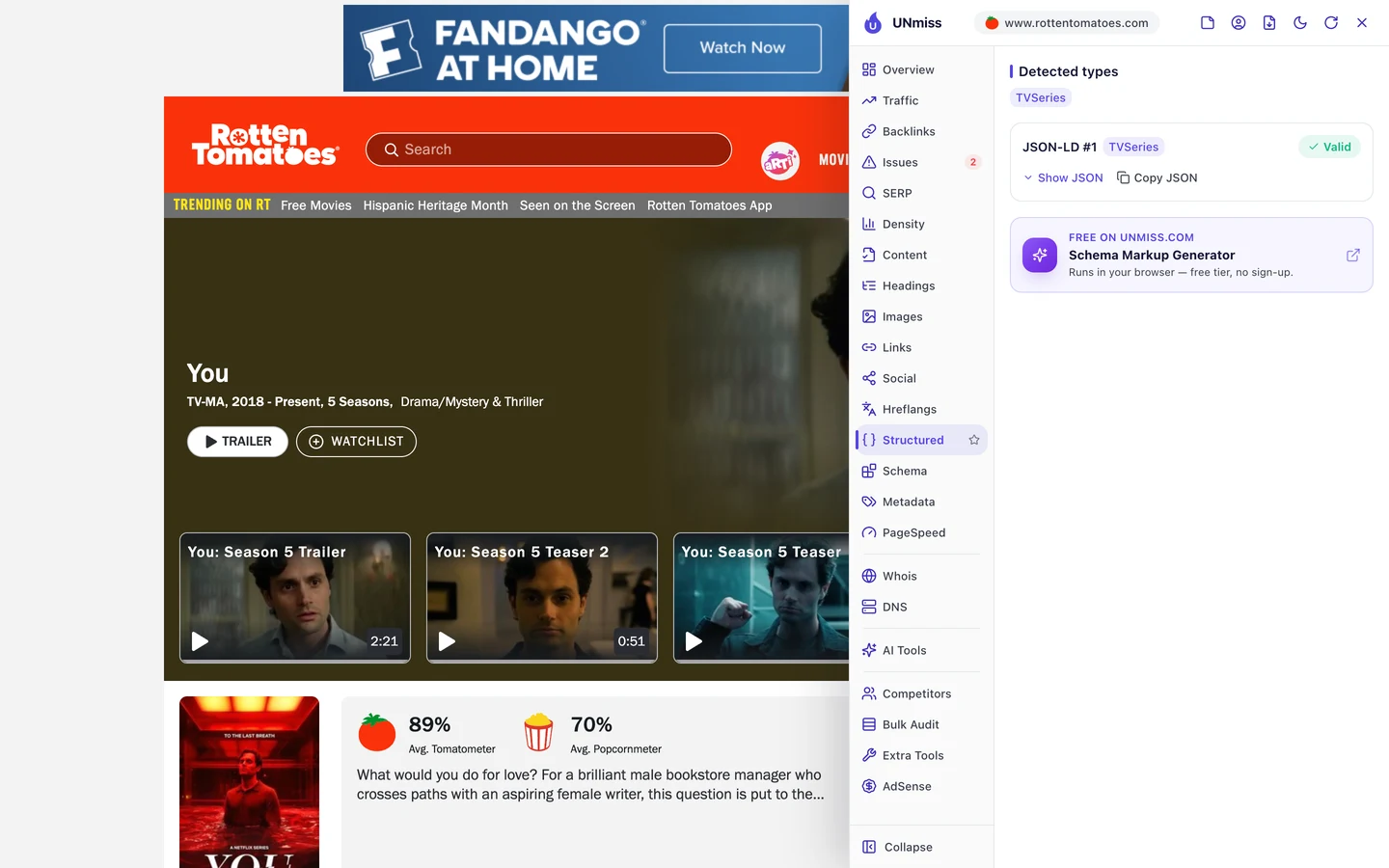
This page tells Google it's a TV series. The audit found film pages marked as films too.
So if your pages have ratings, prices or dates, put them near the top and in the code. You can write that code with our Schema Markup Generator.
Give critics a page worth linking
A backlink is a link from another website to yours. Google treats each one a bit like a vote of trust.
The Backlinks tab of our audit shows the same data as our Backlink Analyzer.
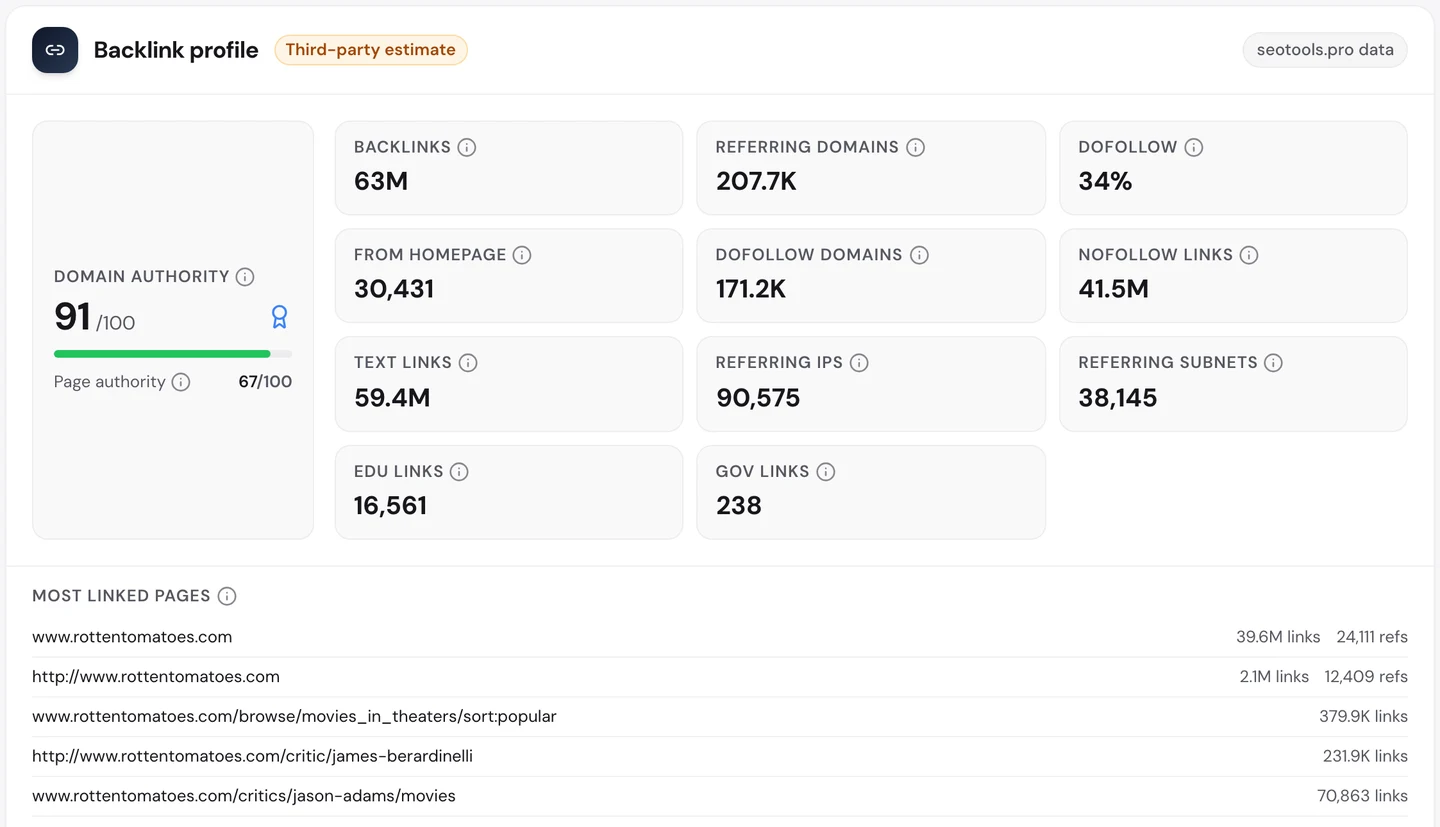
Rotten Tomatoes has about 63M links from more than 200K websites. After the homepage, some of the most linked pages belong to critics.
Each critic gets a page listing their reviews and scores. Critics then link to that page from their own sites, and every link sends trust back.
So give the people who work with you a page they're proud to share, like an author page or a partner profile. They'll link to it for you.
Audit the film page template
When you build millions of pages from a few templates, one mistake spreads fast. So we checked Rotten Tomatoes with our Website Audit.
It crawls a site the way Google does. It opens each page, follows the links to the next ones, and tests every page against a long list of checks.
We had it crawl 250 pages. Rotten Tomatoes scored 80 out of 100, which the report rates as good.
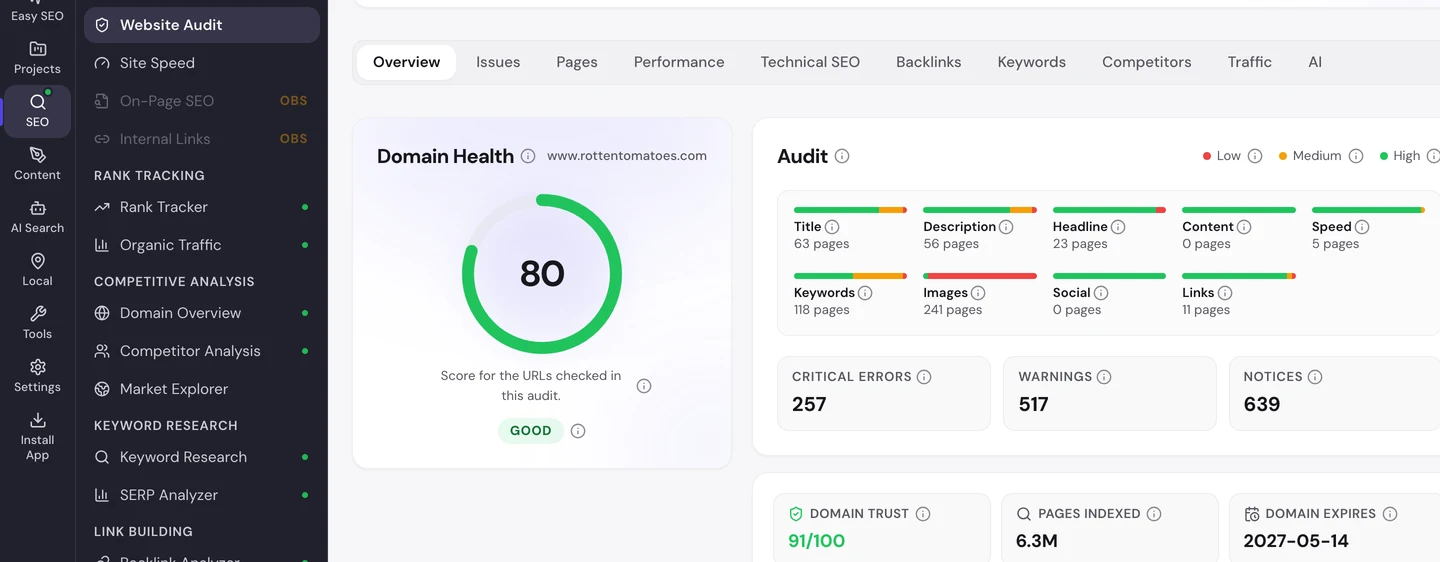
The Issues tab sorts the problems by how much they matter to you.
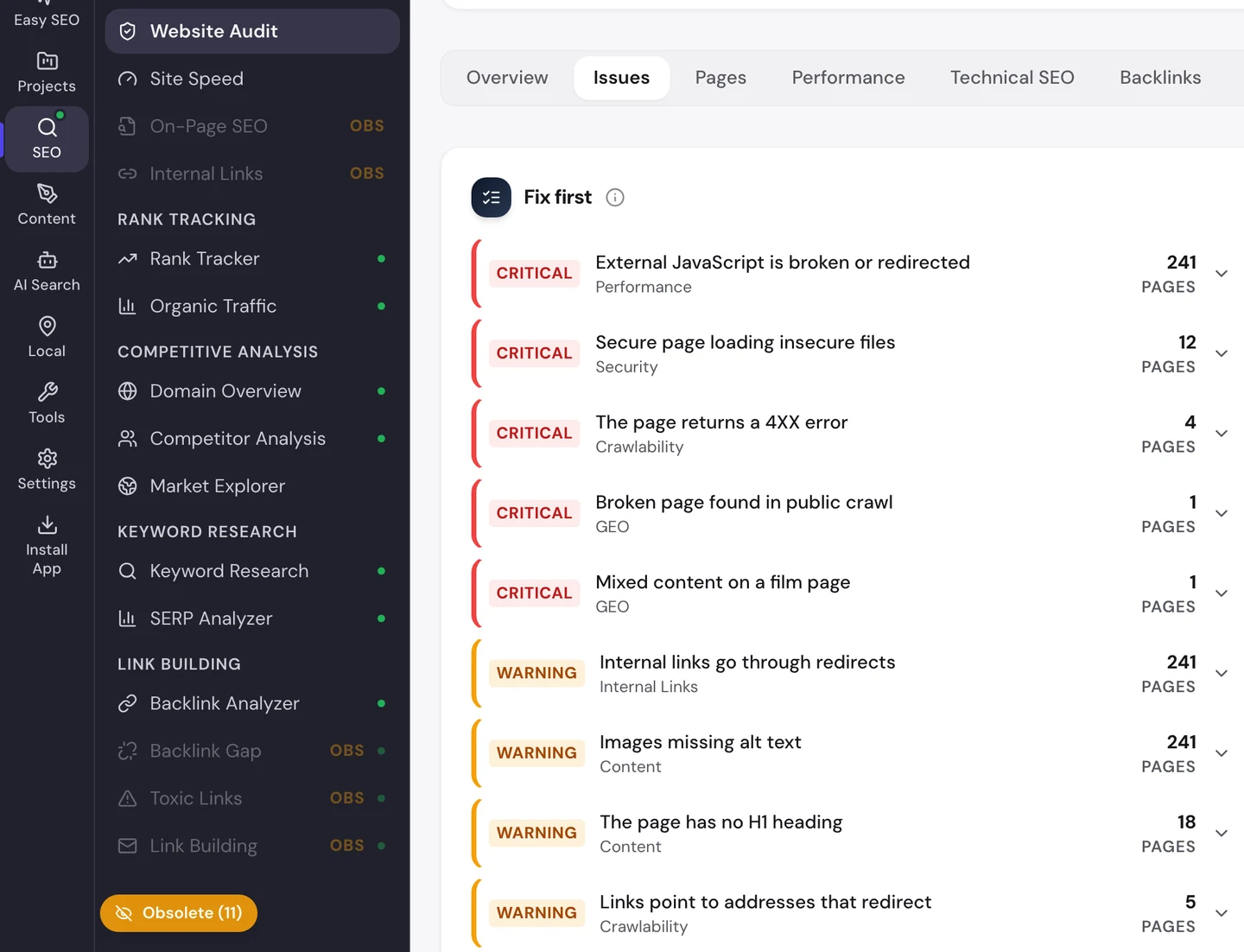
The top error is one outside script that's broken or redirected, and it loads on 241 of the 250 pages. A few pages also load files over plain http, which browsers warn about.
The Pages tab shows how far it reaches.
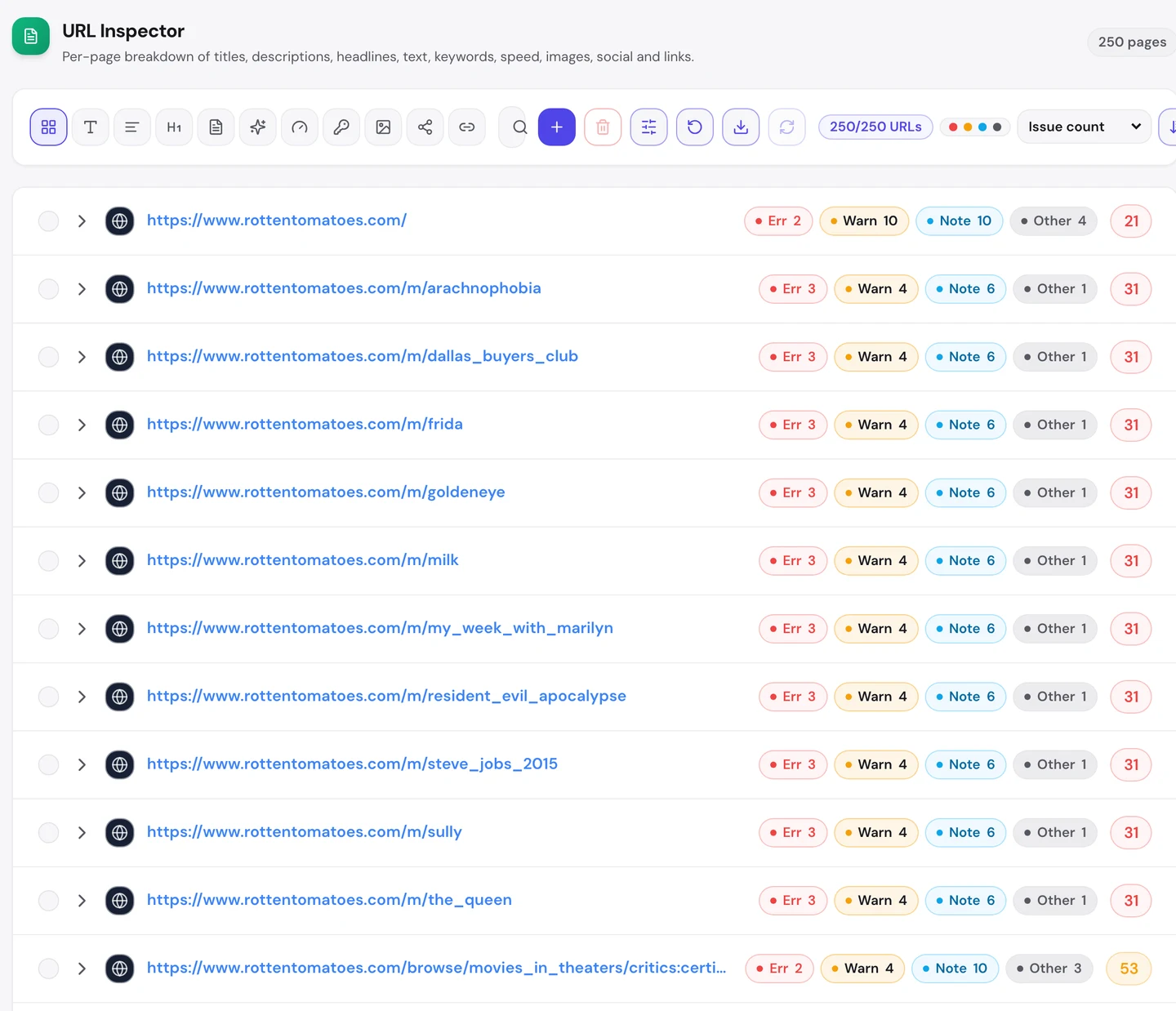
Film page after film page scores 31, with the same 3 errors. That's one template, copied thousands of times.
The Technical SEO tab adds 2 smaller finds.
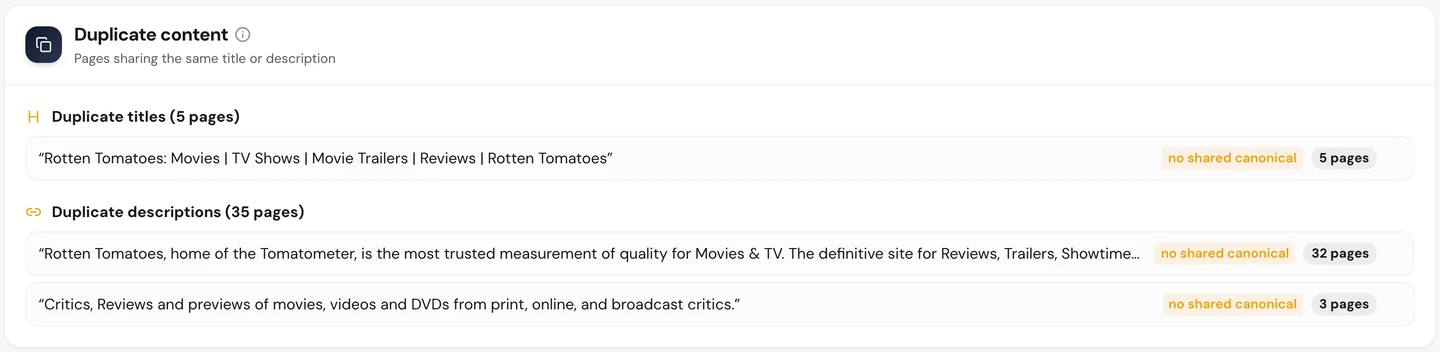
One description is reused on 32 pages, so Google can't tell them apart from the summary alone.
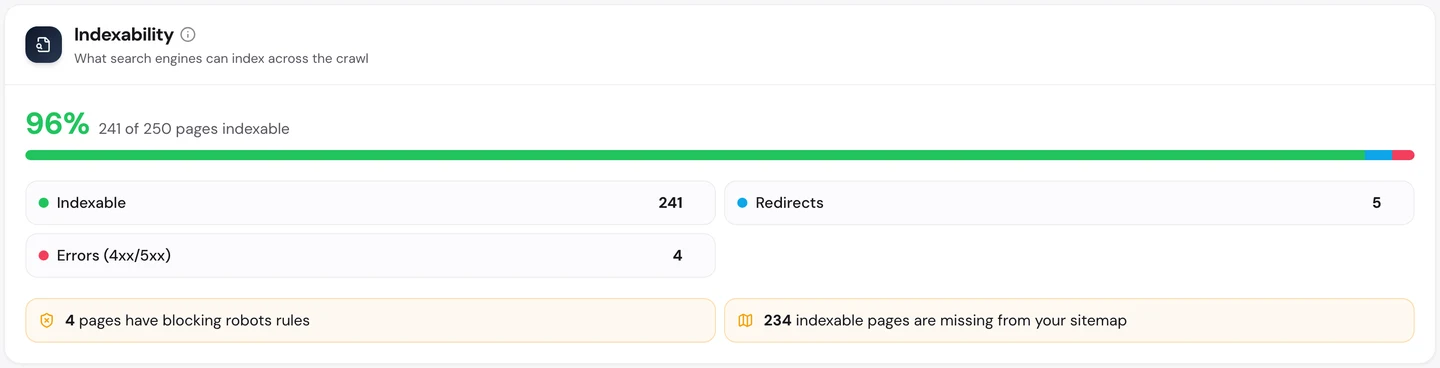
And 234 pages that Google may list are missing from the sitemap, the file that lists a site's pages for Google.
You don't have to work out what to fix first. The audit's AI tab writes the plan: a short summary, each problem with how to fix it, and a 90-day to-do list.
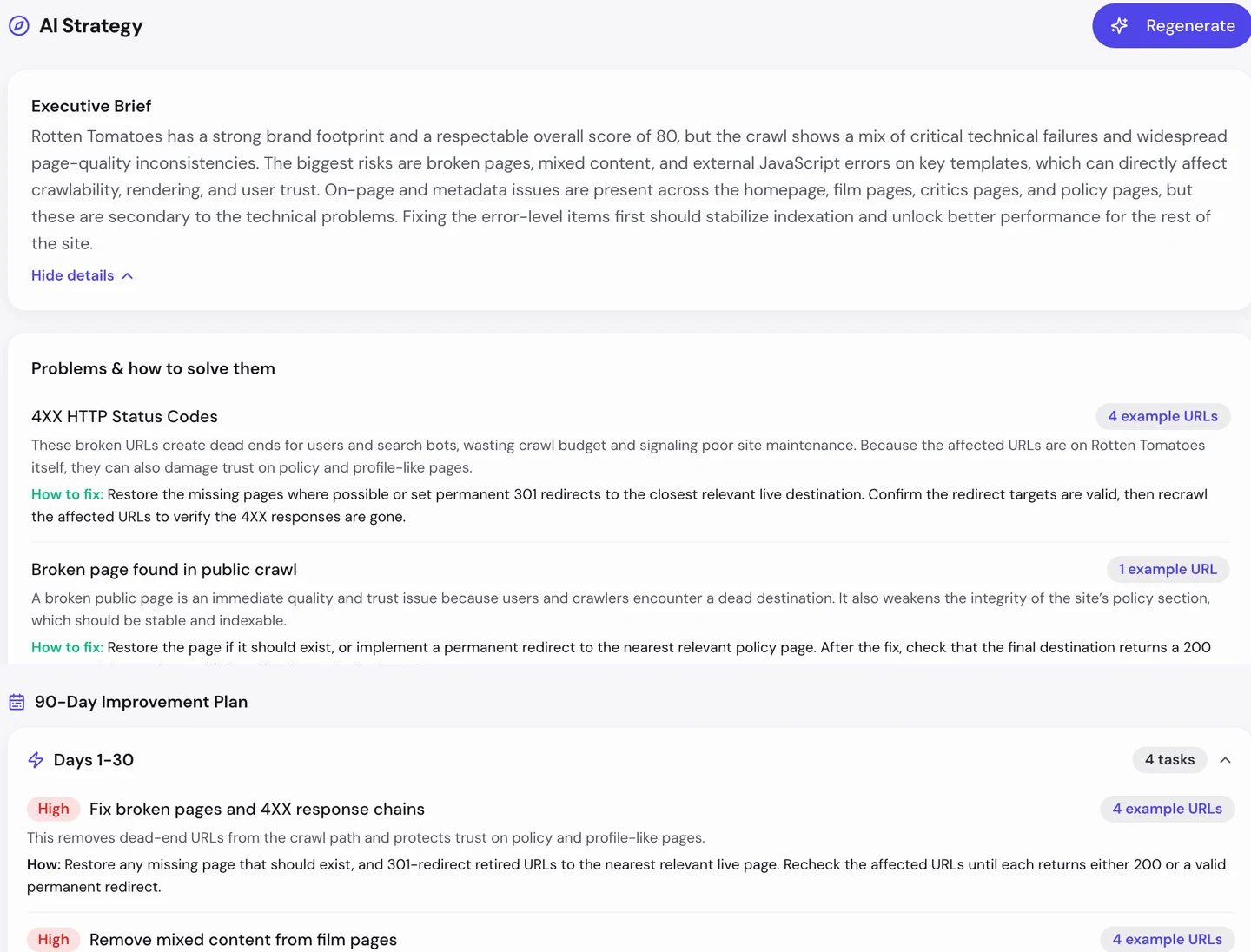
For Rotten Tomatoes, the first month goes to the broken pages and the insecure files. Fix the template once, and every film page gets better.
Keep pages still and fast
The Performance tab of the audit shows Core Web Vitals. These are Google's 3 checks of how fast a page loads, how fast it reacts and whether it stays still, measured on real visitors' devices.
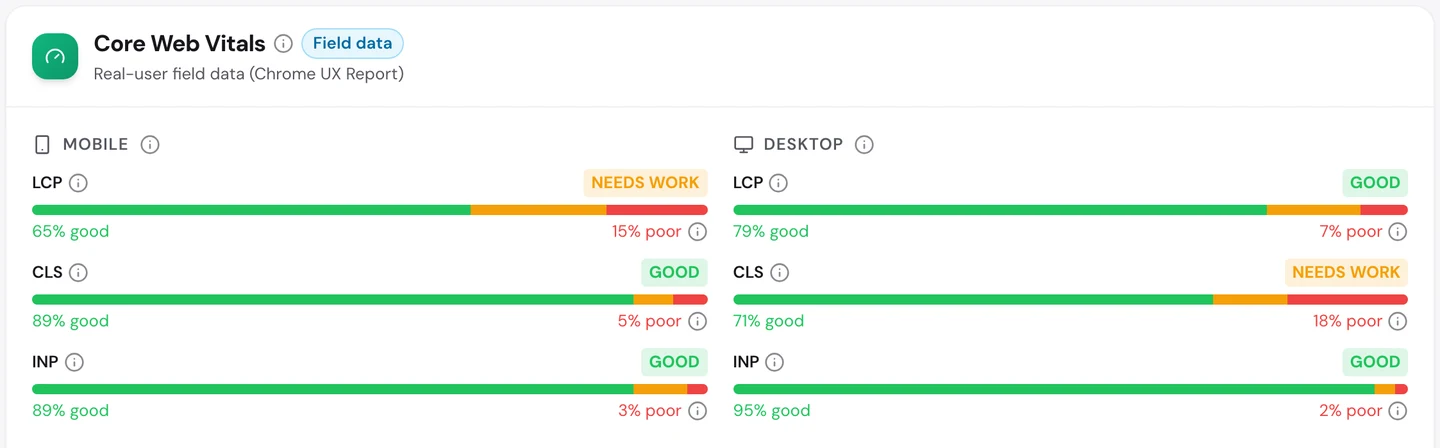
On phones, the main content loads too slowly for about a third of visits. On desktops, pages jump around while they load, often when an ad or image pops in late.
You've probably clicked the wrong button on a page like that. It's annoying, and Google counts it.
So reserve space for ads and images before they load. Our Site Speed tool shows what slows each page down.
Know who rates the same films
The audit's Competitors tab lists the sites that rank for the same searches as you.
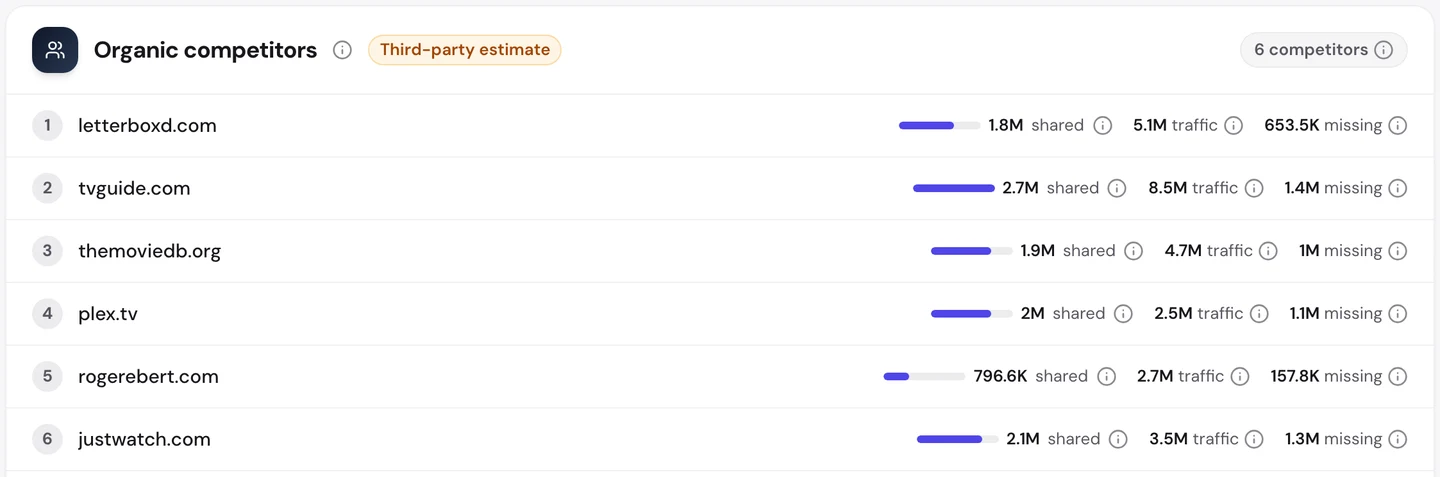
TV Guide shares about 2.7M searches with Rotten Tomatoes. Letterboxd, JustWatch and The Movie Database follow, all fighting over the same titles.
Our Domain Overview shows what that fight looks like underneath.
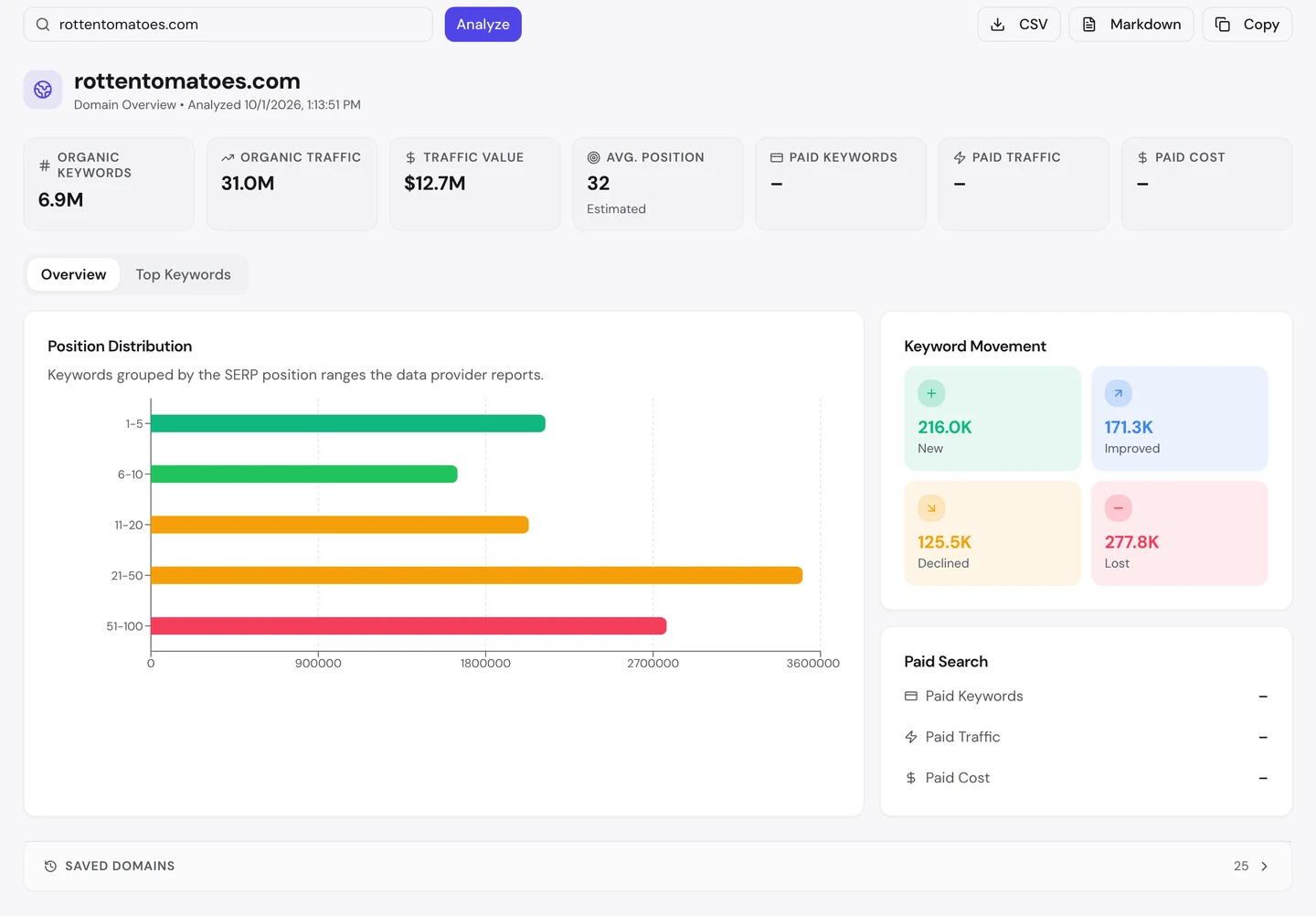
The traffic is worth about $13M a month in ad money. But hundreds of thousands of keywords arrive and drop away every month, as new films come out and old ones fade.
So track the titles that matter most to you in our Rank Tracker. You'll see a rival pass you in days, not months.
Let AI tools read your reviews
More and more people now ask ChatGPT or Claude what to watch, instead of searching Google. So we checked which AI tools may read Rotten Tomatoes.
Each of those tools sends a crawler, a program that visits pages and reads them. The rules for crawlers live in robots.txt, a file that tells crawlers what they may read, and our extension reads it for you.
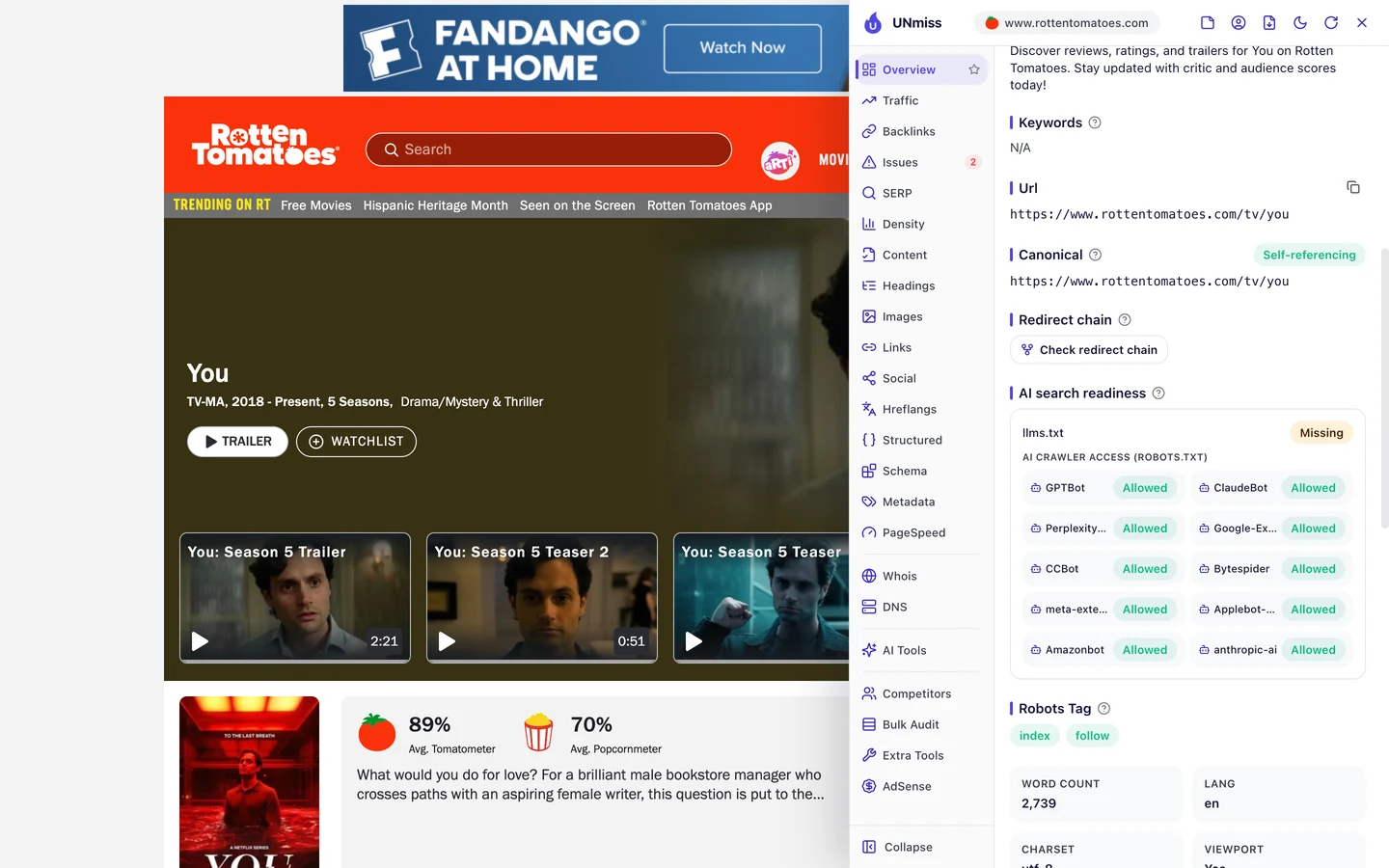
Rotten Tomatoes lets every AI crawler in. So when you ask an AI tool whether a film is good, it can read the scores and quote them.
wikiHow, the how-to site we studied, made the opposite choice and blocks them.
Make your choice on purpose. Write your rules with our robots.txt generator, then check whether AI tools mention you with our AI Visibility Checker.
Every one of Rotten Tomatoes' top pages is a title or a list. Our Organic Traffic Checker shows your top pages and the share each one brings, so you can see which kind of page is working for you.
- The same report that measured Rotten Tomatoes
- Each top page's traffic, share and top search
- Run it on any rival's domain too
What you cannot copy
First, the part you can't copy: decades of reviews from thousands of critics, gathered into one score people trust.
That score is why people search for a film and click Rotten Tomatoes. A new site can start with one kind of item it knows well and a clear way to rate it.
Now a few honest notes on the numbers.
We took our figures on 1 October 2026. The 31M figure counts US searches, and the 64M worldwide figure comes from the audit's Traffic tab.
Both are estimates. Nobody outside Rotten Tomatoes can count its real visits, so tools work them out from rankings and search volume.
We set the crawl to 250 pages, a sample of a very big site. So we used it to find problems that repeat, not to count every error.
The one number to take away
0%.
That's the share of searches we sampled where people typed the name Rotten Tomatoes. Everyone in our sample searched for a film or a show, and found a page waiting for them., and found a page waiting for them.
That's the lesson for any business with a catalogue. People search for the thing they want, not for you, so build a page for every thing.
Know an item your customers search for by name? That could be your next page.
You can run every one of these checks on your own site, and on your rivals', and see the same numbers for yourself.
Frequently asked questions
How many pages should a new catalogue site start with?
Start with your best-known items, maybe 50 to 100, and make each page genuinely useful. Add more once those get indexed and visited. Thousands of thin pages at once can hurt more than help.
Is it bad to change the date on an old list?
Only if nothing else changes. Update the list itself, like new entries or fresh rankings, then change the date. A new date on an unchanged page can lose readers' trust.
Can user reviews help SEO?
Yes, when they add real detail that the rest of the page doesn't have. Moderate them for spam, and show them as text on the page, not hidden inside a widget Google can't read.
Do star ratings show up in Google results?
Sometimes. Google shows review stars only for certain kinds of pages and only when the rating comes from real reviews. Marking up your own scores for your own business doesn't qualify.
What happens when a page I link to disappears?
Visitors hit a dead end and the link's trust is wasted. Redirect the old address to the closest live page, and update any links on your site that point to it.
Why do pages jump around while loading?
Usually because an image, ad or banner loads late and pushes the content down. Give each one a fixed space in the layout from the start, so nothing moves.
Should a small site use an outside script for ratings or ads?
Only if you can watch it. When an outside script breaks, it can break every page that loads it. Check your key pages after any change from the provider.
How do I know which of my pages compete for the same search?
Look for searches where 2 of your pages rank at once. An audit's Keywords tab flags them. Then choose one page to rank and point the others to it.